
A roof can stay dry through ordinary showers and leak during one hard, windy downpour. That pattern is useful. It tells us the fault may depend on how much rain is falling, how long it lasts, or which direction the wind is pushing it.
It does not identify the defect by itself. A stain beside a chimney might begin at the flashing, a nearby valley, or higher up the slope before water travels inside. The aim is to narrow the inspection without guessing or assuming the whole roof needs replacing.
If your roof is leaking only in heavy rain, a small weakness may be letting water through once rainfall reaches a certain volume, duration, or angle. Wind-driven rain can test flashings, verges, rooflights, vents, and wall junctions differently from a light vertical shower, while prolonged rain can expose slow drainage or ponding problems. Record when the leak starts, the wind direction, and where the first mark appears. That evidence helps a roofer trace the source, but it is not a diagnosis on its own.
Get An Intermittent Roof Leak Checked
Send us the leak pattern and photos, or arrange an inspection for a clear diagnosis and written quote.
✅ Free Quote • No Hidden Costs • Same-Day Response
Table of Contents
- Why the roof leaks only in heavy rain
- Match the rain pattern to likely inspection areas
- Why the stain may not be below the leak
- What to record safely during the next downpour
- When a heavy-rain leak is urgent
- How a roofer confirms an intermittent leak
- Repair or replacement
- Frequently asked questions
Why Is Your Roof Leaking Only in Heavy Rain?
Light rain usually falls at a gentler rate and drains away before it can test a small gap or slow outlet. A downpour changes the amount of water moving across the roof. Add wind, and it can also change where that water reaches.
Met Éireann's explanation of driving rain says its effect on buildings depends on rain intensity and duration together with wind speed and direction. Its published guidance discusses rain against vertical surfaces, but the same weather observations are valuable when investigating a roof leak: the conditions alter how the building is being wetted.
More water can expose a small weakness
A flashing joint, tile lap, valley, gutter, or flat-roof outlet may cope in a shower. During intense rain, more water reaches that detail in less time. If drainage slows or a joint is already marginal, water may cross a line it does not reach in lighter conditions.
Heavy rain has not necessarily made a new hole. It may have revealed a defect that was already present but stayed below its leaking threshold most days.
Wind changes the route
Rain without much wind mostly follows the roof's designed drainage path. Driving rain reaches exposed sides of chimneys, rooflights, vents, verges, ridges, and roof-to-wall junctions at a different angle.
If the leak happens only when wind comes from one side of the house, write that down. It makes details on the exposed roof slope more relevant, although they still need to be inspected before anyone can name the repair.
Duration matters as much as intensity
A stain that appears within minutes suggests a different route from one that becomes visible after two hours of steady rain. Delayed moisture may have travelled along underlay or timber, collected in insulation, or built up around a slow valley, gutter, or flat-roof outlet before reaching the ceiling.
The delay is evidence. It does not mean the leak is less important.
Match the Rain Pattern to the First Places to Inspect
This table is a starting point for an inspection, not a remote diagnosis. More than one fault can produce the same indoor mark.
| What you observe | What it may point towards | Why the pattern matters | What to record |
|---|---|---|---|
| It leaks only in strong wind or when wind comes from one direction | Flashing, verge, ridge, rooflight, vent, side lap, or wall junction on the exposed slope | Wind changes the angle and pressure of the rain | Wind direction, exposed side of the house, and start time |
| Dripping starts quickly during an intense downpour | A local opening or a drainage detail being overwhelmed | Fast onset makes a direct or high-flow route more likely | The first drip location and how soon it began |
| The mark appears after prolonged rain or grows after rain stops | Slow tracking, saturation, valley or gutter backup, or flat-roof ponding | Water may collect or travel before it becomes visible | Rain duration and the delay before the mark appeared |
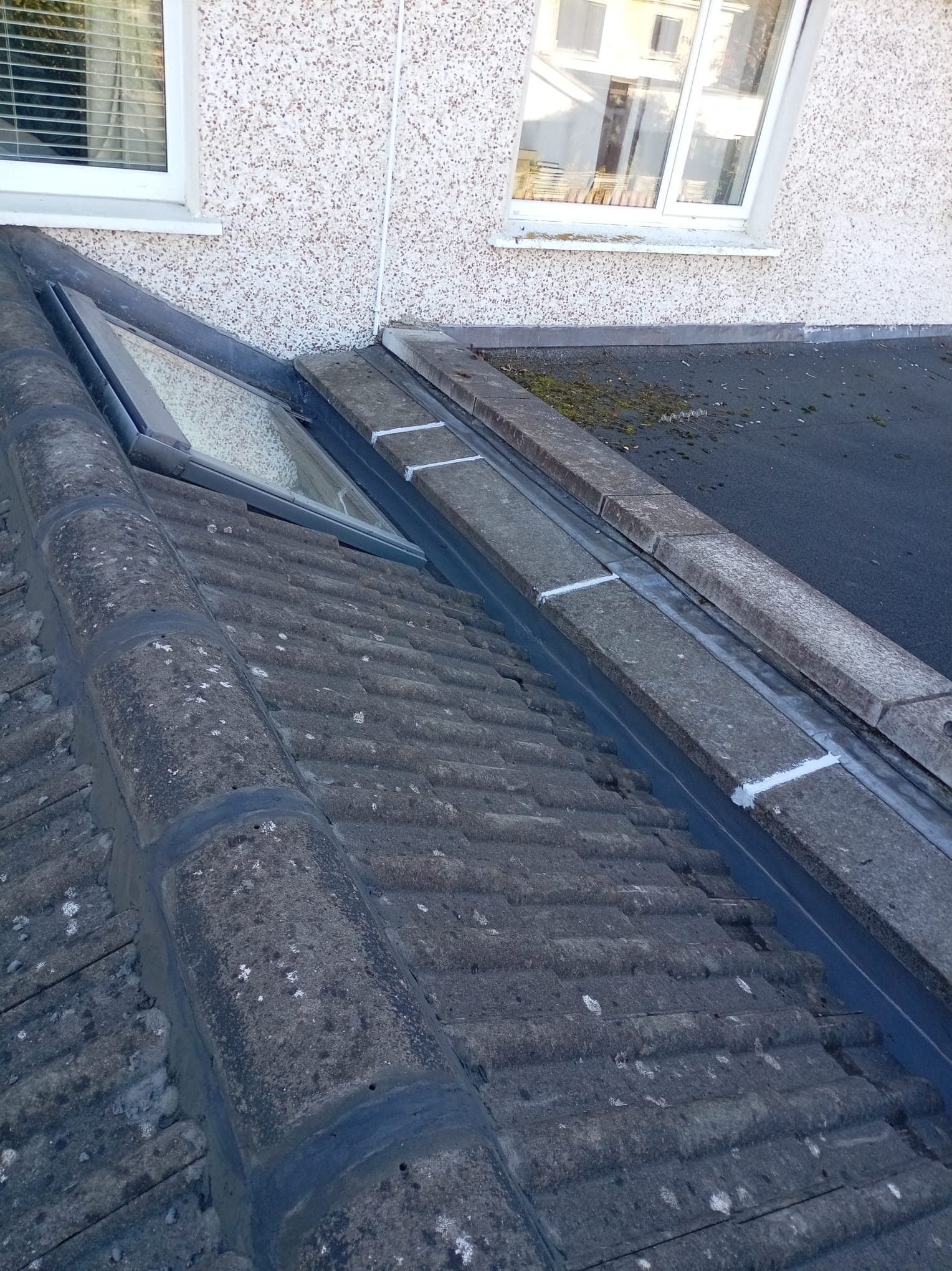
| The mark is beside a chimney, valley, or rooflight | The nearby junction deserves attention, though the entry point may be higher or to one side | Roof transitions contain several overlapping materials and drainage paths | A wide photo showing the mark in relation to the feature |
| Damp appears at an external wall or ceiling edge | Gutter overflow, fascia or soffit detail, a roof-to-wall junction, or rain entering the wall/window area | The symptom may not begin in the main roof covering | Whether the gutter overflowed and whether the wall or window was also wet |
For a chimney- or valley-specific pattern, our guide to chimney flashing and valley repairs explains the relevant details. Symptoms around an extension may instead need a flat roof assessment, while water close to a roof window should include its flashing and drainage channels in the inspection; see our Velux and skylight services.

Why the Ceiling Stain May Not Be Below the Leak
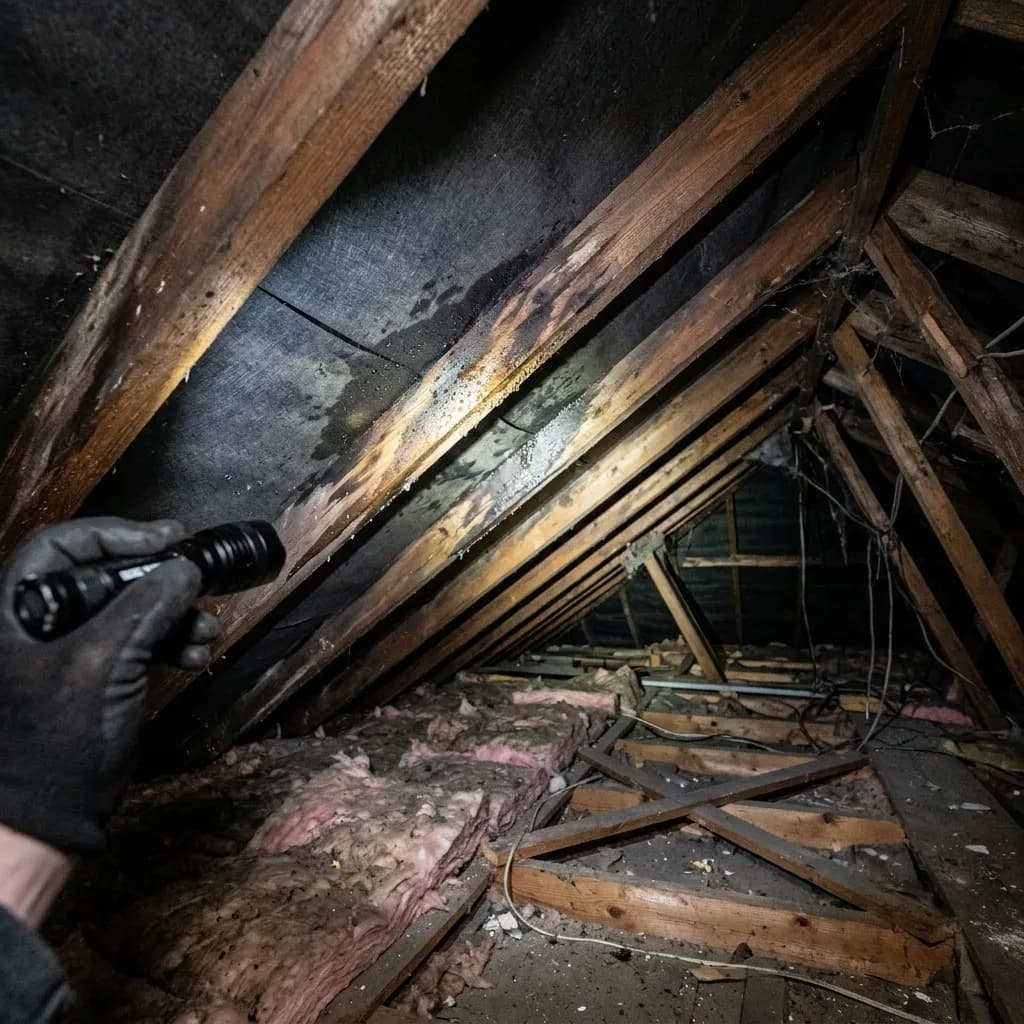
Water follows the easiest available path. Once it gets below the roof covering, it may run along underlay, a rafter, pipe, cable, or the top of a ceiling before gravity brings it into view.
The route can look like this:
Exterior entry point → underlay or timber → insulation or ceiling surface → visible stain
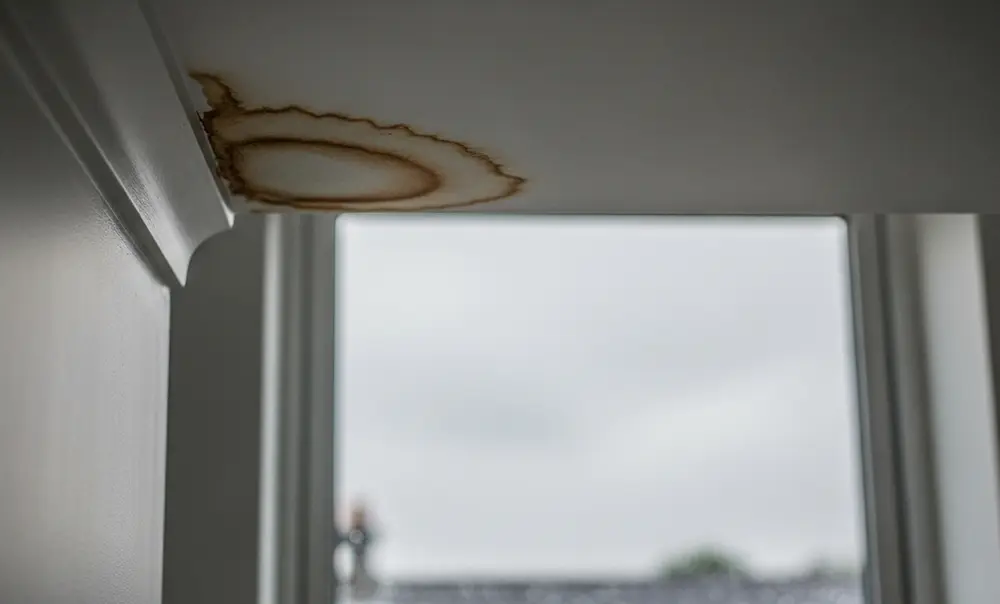
That is why sealing the area directly above a brown mark can fail. The visible stain is the end of the route, not necessarily the beginning.
On a pitched roof, the useful clues are the direction of the timber, the slope above the mark, and nearby junctions. On a flat roof, water can sit above the deck or travel within a build-up before appearing some distance away. A professional roof inspection should follow the moisture trail and inspect the exterior details that match the weather pattern.
What to Record During the Next Downpour Safely
Useful leak evidence comes from inside the home or from ground level. Do not climb onto the roof or use a ladder in wet or windy weather. The Health and Safety Authority's roofwork code sets out the need for competent planning, suitable access equipment, secured roof ladders, and assessment of wind conditions.
How to Record a Heavy-Rain Roof Leak Safely
A short observation log that helps a roofer narrow an intermittent leak without you accessing the roof.
Supplies Needed:
- Notebook or notes app
Tools Needed:
- Phone camera
- Torch
Step 1: Note the time and weather
Write down when the rain began, whether it was light or heavy, and whether strong wind was hitting a particular side of the house.
Step 2: Record when the symptom starts
Note how many minutes of rain passed before the first drip or fresh damp appeared. Check whether the mark grows after the rain stops.
Step 3: Photograph the full location
Take a wide photo showing the stain in relation to the chimney breast, external wall, rooflight, or ceiling edge, followed by a close-up.
Step 4: Check accessible attic areas only
From a boarded or otherwise safe standing area, use a torch to look for fresh trails, dark timber, or wet insulation. Do not step between joists or disturb wiring.
Step 5: Observe drainage from ground level
If it is safe to stand outside, look for a visibly overflowing gutter or downpipe. Do not climb up to clear or inspect it during the rain.
Step 6: Keep the record for the inspection
Send the notes, photos, and videos with your quote request. They help the roofer choose where to begin when the roof is dry.
If the damp appears even in dry weather, spreads evenly across a cold surface, or improves mainly with ventilation, compare the pattern with our guide to condensation versus a roof leak. A nearby bathroom, water tank, or pipe can also produce a ceiling mark with no connection to rain.
Is a Heavy-Rain Roof Leak an Emergency?
The rainfall pattern tells us how to investigate. The amount of water and the safety risk decide how fast to act.
Call for urgent help
Keep clear of the affected area and call if water is close to electrics, the ceiling is sagging or bulging, the flow is difficult to contain, or the storm has visibly displaced roofing materials. Loose materials outside also need urgent attention because they may put people below at risk.
Our emergency roof repair service across Dublin is the right route for active ingress or a safety concern. Permanent roof access may have to wait until conditions are safe, but the immediate problem can still be assessed and prioritised.
Active Leak Or Safety Concern?
Call when water is entering now, a ceiling is bulging, or storm damage has left loose or exposed materials.
⚡ 24/7 Emergency Response Available
Arrange a prompt inspection
A recurring stain, wet insulation, a musty attic, or a repair that fails in the next downpour may not require an emergency call while everything is dry. It does need a proper source check before the same conditions return.
Monitor a dry, unchanged mark briefly
An old mark that is fully dry and has not changed can be photographed and outlined lightly with a pencil so you can see whether it grows. Do not leave it unexamined through repeated storms. A new edge, darker colour, or fresh damp moves it into the prompt-inspection category.
How a Roofer Confirms an Intermittent Leak
The investigation should bring the indoor symptom, weather record, and roof layout together. That normally means checking accessible attic areas for a moisture trail, then inspecting the relevant exterior covering, junctions, and drainage details when access is safe.
Moisture meters or thermal imaging can support an inspection in some situations. They do not identify every entry point on their own. Controlled water testing may also help with a stubborn leak, but it should be planned and carried out professionally so it does not add unnecessary water to the building.
Ask for a clear explanation of:
- the suspected entry point and the evidence for it;
- whether the proposal is temporary weatherproofing or a permanent repair;
- the area that will be opened, repaired, or replaced;
- the materials and access included in the scope;
- photographs where they are useful; and
- a written quote before permanent work begins.
Secure Top Roofing is based in Dublin 15 and carries out roof leak detection and repair across Dublin. Our inspection work can include written reports and photos where documentation is needed.

Does a Heavy-Rain Leak Mean You Need a New Roof?
Usually, that decision depends on what the inspection finds rather than how dramatic the downpour felt.
An isolated flashing defect, slipped slate, blocked outlet, or failed rooflight detail may suit a local repair if the surrounding roof is sound. Widespread covering failure, deteriorated battens or deck, repeated leaks in several areas, or a roof near the end of its practical life can change the calculation.
There is also a middle ground. A sound roof can have more than one weak junction, and repairing those details may still make better sense than replacement. Our roof repair versus replacement guide sets out the wider decision without treating one leak as proof that the whole roof has failed.
Heavy-Rain Roof Leak Questions
Heavy-Rain Roof Leak FAQs
Heavy rain increases the volume of water moving across the roof and can overwhelm a slow drainage detail or expose a small existing weakness. Wind may also drive rain against junctions that a light vertical shower does not test in the same way. The pattern narrows the inspection but does not confirm the repair by itself.
Give the Inspector a Pattern, Not a Guess
One heavy-rain leak is enough to investigate, even if the ceiling dries by morning. Record the conditions, the delay, and the first visible mark. Those details help separate a local junction problem from slow drainage, water tracking, condensation, or a non-roof source.
If water is entering now or there is a safety concern, use the phone route. For a dry but recurring mark, send the observation log with a roof leak quote request and ask for the source to be explained before the repair is agreed.
Find The Source Of Your Intermittent Leak
Share your photos and weather notes or arrange an inspection. We will explain the likely source, repair scope, and written quote before permanent work begins.
Fully Insured • 10-Year Workmanship Guarantee • Based in Dublin 15