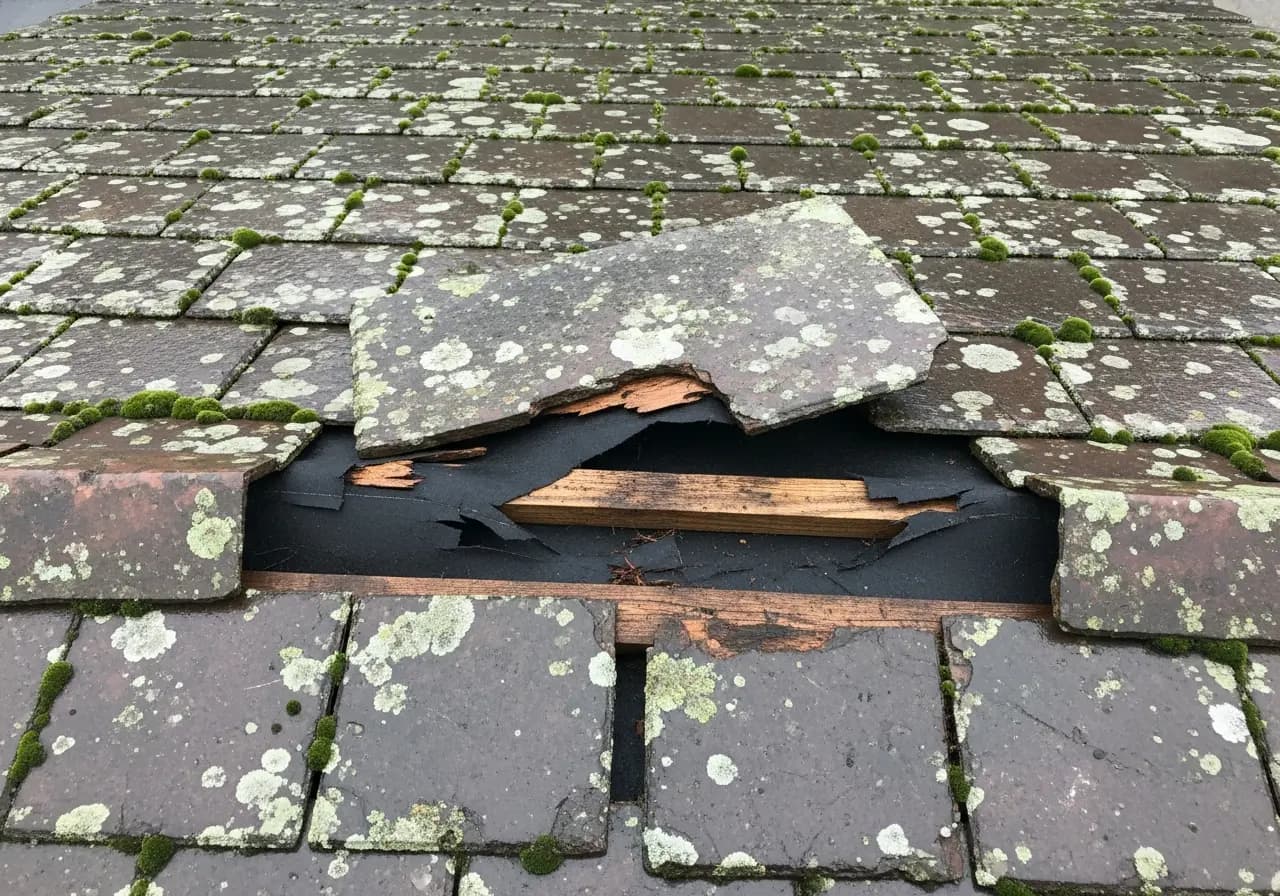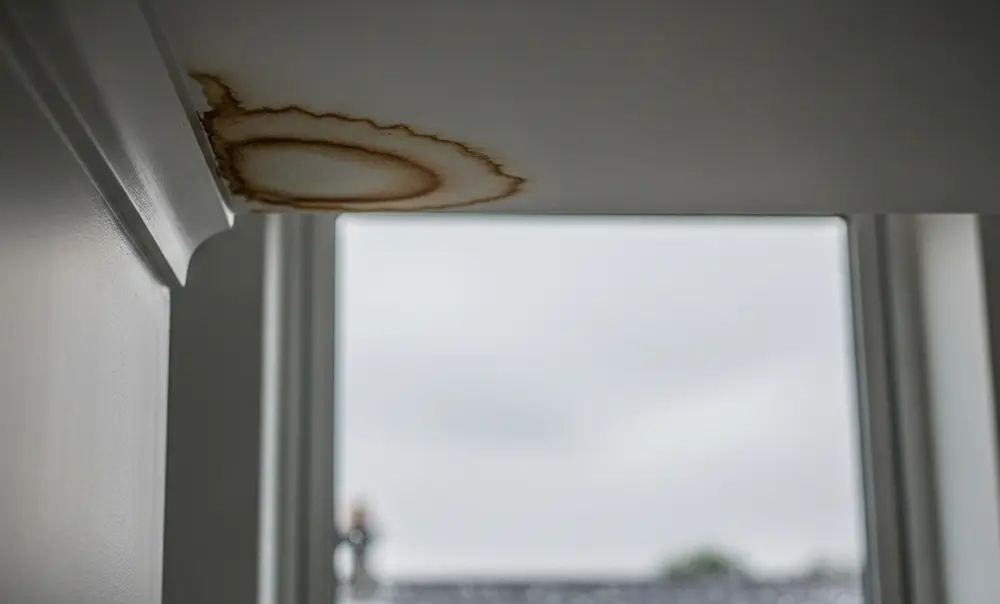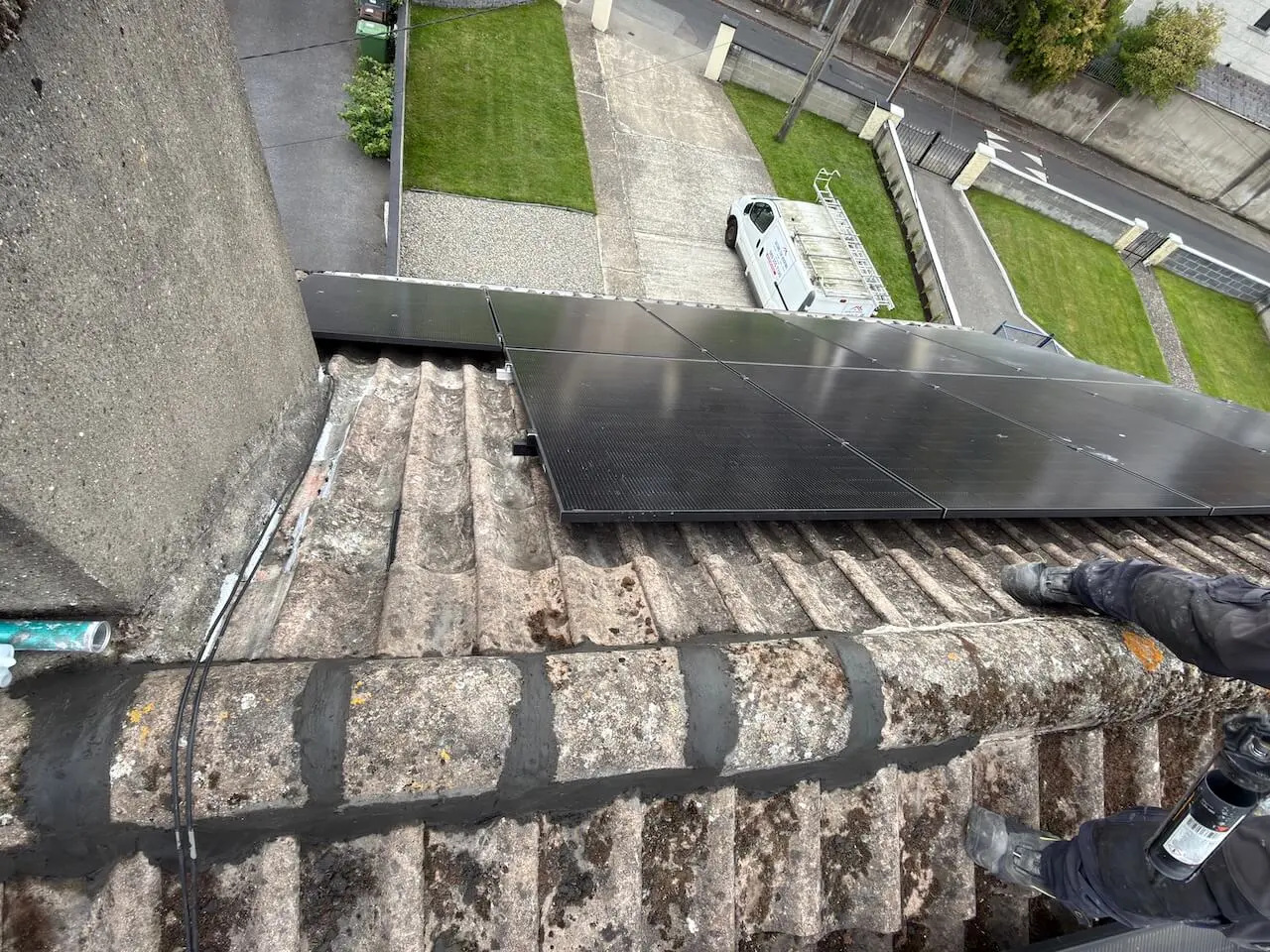

We recently investigated a roof leak under solar panels at a home in Clondalkin, Dublin. The homeowner told us the roof had already been inspected and repaired before the panels were installed, but the leak still needed attention.
When we opened the affected section, we found very old roof felt with several holes in the area of the leak. The repair meant carefully removing the panels over that section, lifting the tiles and battens, and replacing the damaged underlay. We also repointed the ridge caps along the same section.
This Clondalkin repair addressed worn, perforated felt beneath the roof tiles. Access was more delicate because solar panels covered the work area, so the affected panels had to be securely removed before the roof could be opened. We renewed the underlay locally and repointed the ridge caps; this was a repair to one section of the roof.
Have a recurring leak beneath solar panels?
Tell us where the leak appears and what roofing work has already been done. We can assess the roof and explain the access and repairs needed.
Discuss access and repair scope before work begins.
What we found during the Clondalkin roof inspection
The homeowner's account was that the felt had not been checked during the earlier roofing work. Our inspection found that it was badly worn in the affected section, with visible openings beneath the tiles.
Roof felt, also called underlay, sits beneath the timber battens that support the tiles. The tiles shed most rainwater. The underlay provides a secondary route for water that gets past the covering to drain down the roof.
Holes interrupt that protection. They can let water through into the roof space when it reaches the underlay, even where the tiles above still appear serviceable. Repointing a ridge or repairing a visible tile does not renew damaged felt underneath.

With tiles lifted, the older underlay and battens were visible beside the solar-panel mounting rail.
The closer photograph shows the condition more clearly: there are gaps and torn edges in the old felt. This was the section we opened to deal with the leak.

The openings in the old felt can be seen below the battens as replacement material is brought into the work area.
Our guide to repairing damaged felt beneath roof tiles explains why access from above is often needed. The important detail is how the repair connects with the surrounding underlay so that water can continue draining over it.
Repairing the roof leak under solar panels
The solar panels made access more involved. We had to securely remove the panels over the affected section before proceeding with the roofing repair. The surrounding array and mounting rails meant the work needed careful handling throughout.
Once that area was accessible, we removed the old tiles and lifted the battens to reach the damaged felt. Battens are the timber strips the tiles sit on; leaving them in place would restrict access to the layer we needed to renew.
We installed new roofing underlay across the affected section. This replaced the worn material in that area and restored coverage beneath the tiles.

The renewed underlay is visible beneath the battens before the tile covering is fully reinstated.
The next photograph shows the tiles going back over the repaired section. Taking photographs at this stage is useful because, once everything is covered again, the homeowner cannot see the layer that has been renewed.

Tiles being reinstated over the new underlay, with part of the repaired area still visible.
For homeowners arranging similar work, panel access needs to be agreed as part of the job. Ask who will handle removal and refitting, and who will deal with any electrical disconnection and checks. Solar equipment and roof access require competent professionals; these photographs document our roofing work and are not a guide to removing panels yourself.
Repointing the ridge caps on the repaired section
Alongside the underlay work, we repointed the ridge caps on that section. These are the curved tiles along the top of the roof, with mortar joints between them.
The completed photograph shows the renewed pointing, the tile covering back in place and the panels over the roof again. The visible mortar work and the hidden underlay repair addressed different parts of the section: the ridge joints above and the worn protective layer beneath the tiles.

The repaired section with fresh ridge pointing. The new underlay is now concealed beneath the tiles.
This was a local repair. It does not mean that every roof with torn felt needs replacing, or that renewing one section changes the condition of the remaining roof. The extent of work should follow what an inspection finds.
What this job shows about roof checks before solar
If a roof has an unresolved leak, it is worth establishing the cause before panels cover the area. Once the array is in place, access to tiles and underlay may involve additional work.
SEAI's Domestic Solar PV Code of Practice, section 3, requires installers working under its domestic scheme to consider the roof's age, condition and construction when designing a roof-mounted system. For a homeowner, the practical question is what has actually been assessed, including any areas that could not be seen.
Before arranging panels on a roof with a leak history, ask:
- Was the leak traced? Get a clear explanation of what was found and what the earlier repair addressed.
- Was the underlay assessed? Ask how its condition was checked and whether any important areas remain concealed.
- What needs doing before installation? Have the roofing scope written down so it can be coordinated with the solar work.
- What records will I receive? Photographs of opened and repaired areas make hidden work easier to understand later.
A roof inspection before solar installation can help establish the roofing work needed. A roof's surface appearance alone cannot confirm the condition of everything underneath it.
Frequently Asked Questions
Arrange a roof leak assessment in Clondalkin
If a leak has continued after roofing work, keep the earlier quote and any photographs so the next inspection can start with that history. Note where water appears indoors and when it happens; photographs taken safely inside can help explain the problem.
Secure Top Roofing is based in Blanchardstown, Dublin 15, and carries out roof repairs in Clondalkin and across Dublin. We can assess the affected area and explain the repair scope, including access where solar panels are present.
Get your roof leak under solar panels assessed
Send us the leak history and any photos you can take safely. We will discuss an inspection and the work needed to reach and repair the affected section.
Discuss access and repair scope before work begins.