
Damaged roof felt can sometimes be repaired locally, but a lasting patch is rarely as simple as taping the tear from inside the attic. The repair normally has to follow the roof's drainage direction, which often means lifting a small area of slates or tiles above it.
That does not automatically mean a full re-roof. The right scope depends on why the underlay tore, whether the surrounding material is still sound, and where rain is entering the roof covering.
Yes, damaged roof felt can sometimes be patched, but a proper repair usually cannot be completed entirely from inside. The new material needs to overlap the damaged area in the right direction so water runs over the repair rather than behind it. That normally requires local exterior access and lifting some tiles or slates. If the felt is brittle, split across several roof bays, or accompanied by damaged battens, a wider strip-back may make more sense.
Get Damaged Roof Felt Properly Assessed
We can trace the water route, inspect the covering above it, and explain whether the roof needs a local repair or wider work.
✅ Free Quote • No Hidden Costs • Same-Day Response
Table of Contents
- What roof felt does
- Can it be patched from the attic?
- Local damage or widespread failure
- Why the visible tear may not be the entry point
- What has to be lifted
- How to check it safely
- When wider underlay renewal makes sense
- Roof felt repair questions
What Roof Felt Does Beneath Tiles and Slates
Roof felt, roofing membrane and roof underlay are often used as interchangeable terms. They describe the layer fitted beneath the outer slates or tiles on a pitched roof.
The slates or tiles are the main weather-facing covering. The underlay provides a secondary route for moisture that gets beneath them, including wind-driven rain, and carries it towards the eaves when the roof is detailed correctly.
Older Dublin homes may have black bituminous felt. Newer work often uses a vapour-permeable, or “breathable”, membrane. Those materials behave differently, so a repair product that suits one system may not suit another.
An NSAI Agrément certificate for a breathable roof underlay describes the underlay as part of a designed roof system. It helps resist water that penetrates the covering and, when correctly incorporated, assists with water-vapour management.
This is why the felt should not be judged in isolation. Slipped slates, cracked tiles, failed flashing, poor laps and damaged battens can all affect what you see from below.
Can Roof Felt Be Patched From the Attic Side?
A small tear may be locally repairable. The important part is how the new material joins the existing underlay.
Water moving down a pitched roof should meet overlapping layers, much like slates overlap the course below. If a patch is simply stuck over the underside, water travelling on the upper face of the felt may still pass behind it or escape at the tear.
The NSAI product guidance above gives a useful example of correct repair geometry. It specifies additional underlay overlapping the damaged area, with the up-slope edge placed beneath the next higher run and the repair secured under a batten. The exact overlap and fixing method must follow the installed product's current instructions, but the drainage principle is the same.
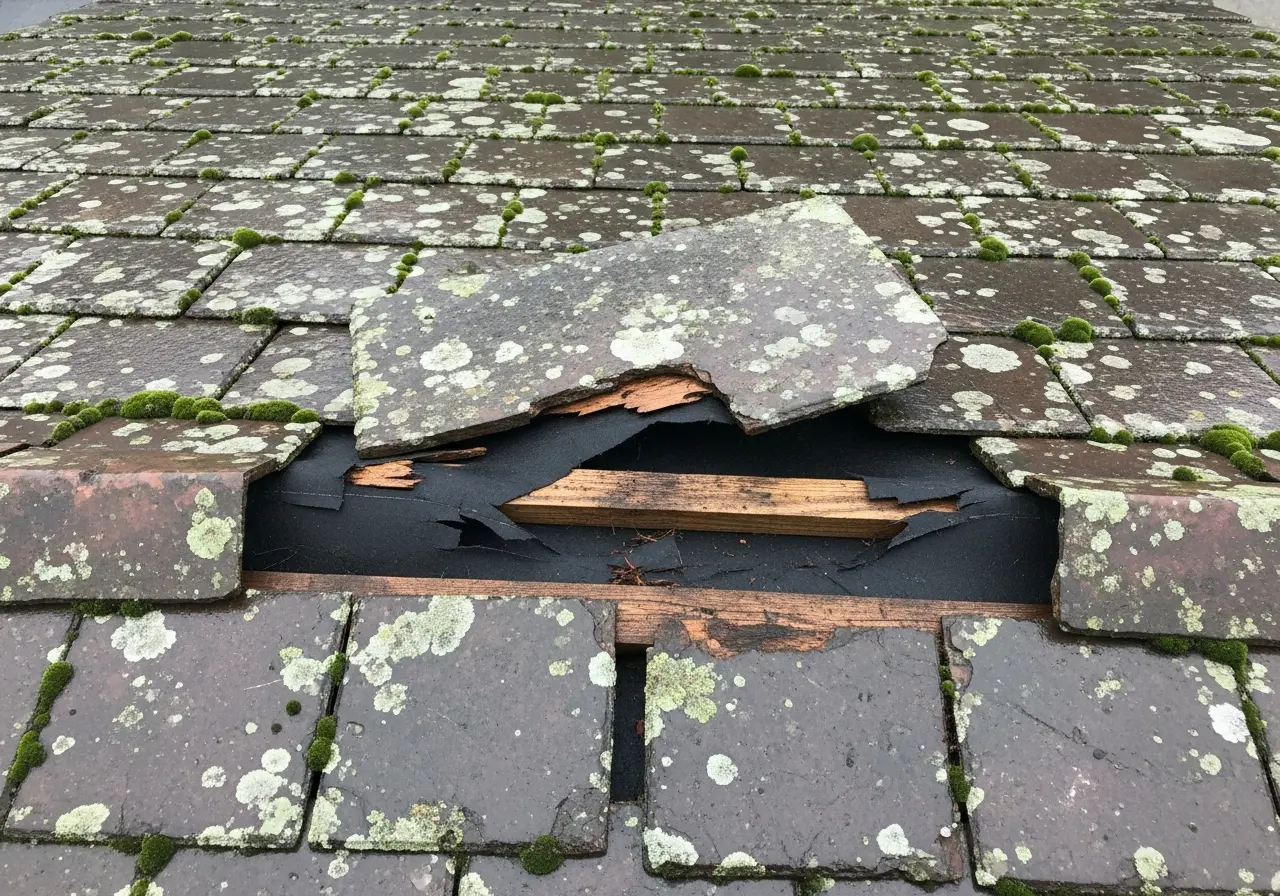
Reaching those upper laps and battens usually means lifting the roof covering locally. A roofer may only need to open a controlled section rather than strip the whole slope.

Why tape or sealant from below is not the same repair
Specialist tapes form part of some membrane systems, but they are product-specific and depend on clean, compatible surfaces and correct detailing. General-purpose tape, silicone, expanding foam or a coating applied from the attic should not be treated as a permanent underlay repair.
An underside patch may also hide the symptom without correcting the displaced slate, failed flashing or broken tile that allowed water through. Before agreeing to a repair, ask how the proposal restores the down-slope water path and deals with the defect above it.
Local Damage Versus Widespread Underlay Failure
The size of the visible hole does not decide the scope on its own. The surrounding underlay, roof covering and timber condition matter more.
| Inspection finding | Likely direction | Why |
|---|---|---|
| One clean tear with sound material around it | Local exterior opening and compatible underlay patch may be suitable | A sound lap can often be rebuilt around an isolated defect |
| A slipped slate or cracked tile directly above local damage | Repair the covering and assess the underlay beneath it | The outer defect may be the original entry point |
| Failed underlay around a chimney, valley, vent or roof window | Open and rebuild the affected junction | These areas rely on several layers working together, not one flat patch |
| Brittle felt, crumbling edges or splits across several rafter bays | Broader strip-back and underlay renewal may be more sensible | New patches need sound material to overlap and connect to |
| Dark, soft or decayed battens and timber | Inspect and repair the timber before closing the roof | Covering the felt alone would leave the supporting defect in place |
| Widespread damp with little connection to rainfall | Check condensation and ventilation as part of the diagnosis | Replacing felt may not solve moisture coming from inside the home |
This table is a starting point, not a remote diagnosis. A professional roof inspection should compare the attic evidence with the exterior covering before a repair scope is chosen.
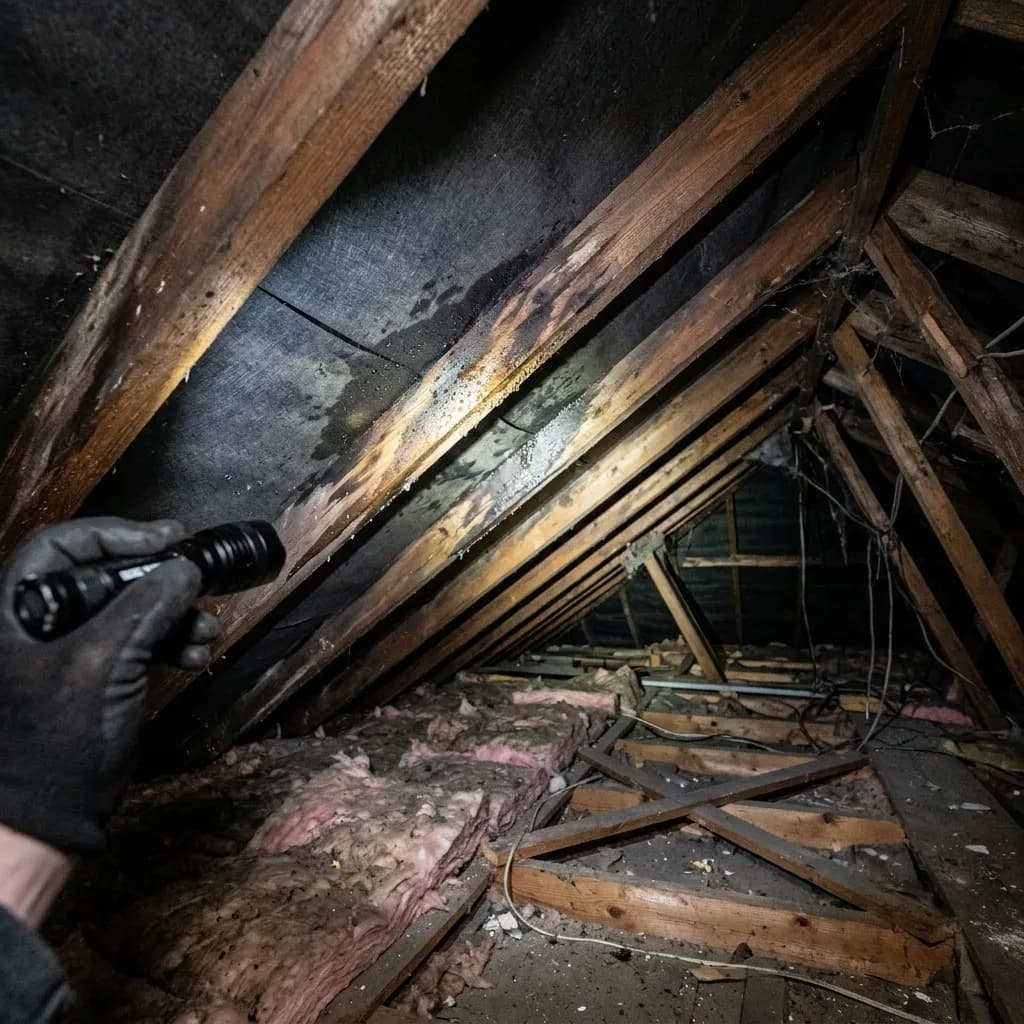
Why the Visible Tear May Not Be the Entry Point
Pitched roofs give water several hidden routes. It can enter at a loose slate, flashing edge or roof penetration, then travel down the top of the underlay before reaching a tear lower on the slope.
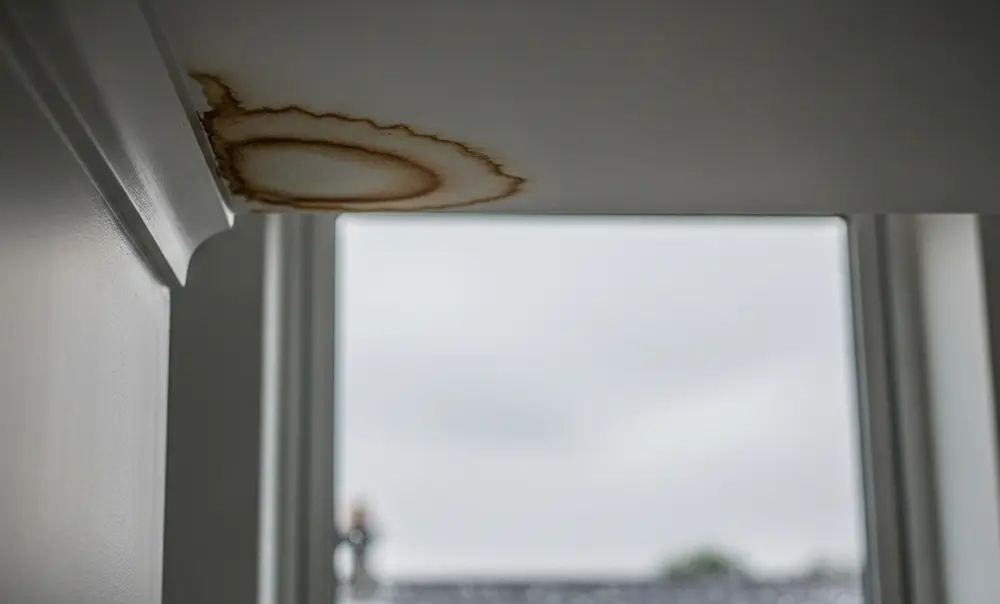
It may also follow a rafter or batten before dripping. The damp patch inside can therefore sit well away from the original exterior defect.
The timing helps narrow the search:
- A drip that starts quickly in rain makes a direct local route more likely.
- A mark that appears after prolonged rain may involve slower tracking or saturation.
- Moisture that appears in dry, cold weather may be condensation rather than rain entry.
- A leak that depends on wind direction makes exposed junctions and laps more relevant.
If the moisture pattern is unclear, compare it with our guide to condensation versus a roof leak. Do not replace large areas of underlay until the source has been separated from indoor moisture and plumbing faults.
What Has to Be Lifted for a Proper Repair?
For a local pitched-roof repair, the roofer normally needs safe access to the slates or tiles around and above the damage. The opening must be large enough to find sound underlay, form the correct lap and secure the repair without creating another weak point.
The work may include:
- removing and setting aside the local slates or tiles;
- checking the covering, fixings and flashing above the visible tear;
- inspecting nearby battens and accessible timber;
- fitting a compatible underlay repair with the correct up-slope lap;
- repairing the original exterior defect; and
- refitting the covering so its fixing and headlap are restored.
The actual area opened depends on tile or slate type, roof pitch, access, batten spacing, tear location and the condition of the surrounding felt. That is why a roof-felt repair does not have one useful fixed price. Our Dublin roofing cost guide explains the access and scope factors that affect a written quote.

Check Damaged Roof Felt Safely From Inside
Keep your own inspection to a boarded, safely accessible attic area. Do not step between joists, disturb wiring or insulation unnecessarily, and do not climb onto the roof to find the other side of the tear.
The Health and Safety Authority's roofwork code explains why roof access needs proper planning, equipment and fall controls. Exterior investigation should wait for a competent roofer and safe weather conditions.
How to Document Damaged Roof Felt Safely
A short internal check that gives a roofer useful evidence without you accessing the roof.
Supplies Needed:
- Notebook or notes app
Tools Needed:
- Phone camera
- Torch
Step 1: Use a safe standing area
Stay on fixed boards or another known safe attic surface. Do not step on insulation, plasterboard, or between joists.
Step 2: Take a wide photograph
Show the tear in relation to rafters, the ridge, eaves, chimney, roof window, or other nearby features. This helps locate the exterior area.
Step 3: Photograph the surrounding material
Take close photos of the tear, felt edges, battens, water tracks, and staining without pulling or cutting the underlay.
Step 4: Record the moisture pattern
Note whether the area is wet now, when it was first noticed, and whether damp appears during rain, after rain, or in dry cold weather.
Step 5: Check the exterior from ground level
From a safe position outside, photograph the roof slope and note visible slipped or broken materials. Do not use a ladder or climb onto the roof.
Step 6: Send the evidence with your enquiry
Share the wide and close photos with your quote request. Treat them as inspection clues rather than proof of a particular repair.
When New Underlay Becomes Part of a Re-Roof
Several tears do not always mean every slate or tile must be discarded. Depending on their condition and the proposed system, some coverings may be suitable for careful removal and reuse while the underlay and battens are renewed.
A wider roof replacement assessment becomes more relevant when the underlay is failing across much of the slope, battens or supporting timber need extensive work, the covering has repeated defects, or local patches would depend on material that is no longer sound.
There is a middle ground as well. One slope or one junction may need opening while the rest of the roof remains serviceable. The written scope should state what will be lifted, what can be reused, what will be renewed and how ventilation and drainage details will be maintained.
Our roof repair versus replacement guide covers the wider decision. Damaged felt is one inspection finding, not an automatic instruction to replace the entire roof.
Roof Felt Repair Questions
Roof Felt and Underlay Repair FAQs
A proper local repair usually requires some tiles or slates to be lifted. This gives access to the upper face of the underlay, allows the new material to lap in the correct direction, and lets the roofer inspect the original water-entry point.
Repair the Water Path, Not Only the Hole
A neat patch visible from the attic can still be on the wrong side of the water. The repair has to deal with the roof covering above, connect to sound underlay and maintain a clear route towards the eaves.
Secure Top Roofing is based in Dublin 15 and carries out roof inspections and repairs across Dublin and surrounding areas. If you can safely photograph the damaged felt, include both wide and close images with your roof repair quote request. We can use them to plan the inspection, then explain whether local opening, wider renewal or monitoring is justified.
Find the Right Scope for Your Roof Felt Repair
Arrange an inspection for a clear explanation of the water route, the area that needs opening, and a written repair quote.
Fully Insured • 10-Year Workmanship Guarantee • Based in Dublin 15