
This home needed roof leak repairs in Clonsilla and help with condensation in the attic. The homeowner reported leaks at the chimney, ridge caps and valley. Moisture was also building up inside the roof space.
We repaired those roof details and fitted vents to improve attic airflow. Looking at the work together explains why a quote can include both waterproofing and ventilation, even when the homeowner first calls about a leak.
Rainwater leaks and attic condensation can happen on the same roof. On this Clonsilla job, we repointed the ridge caps, fitted dry verge covers, repaired and waterproofed the chimney and valley, and installed roof vents. The repairs dealt with the reported rain-entry points; the vents were fitted to help moisture escape from the attic.
Unsure why your roof space is damp?
Tell us when the damp appears and where you see it. We can assess the roof and explain which repairs or ventilation improvements it needs.
✅ Free Quote • No Hidden Costs • Same-Day Response
Roof leak repairs in Clonsilla: what each part addressed
The work covered several parts of the existing roof. Some helped keep rainwater out; another improved airflow inside the attic.
| Part of the roof | Work completed | Purpose in plain English |
|---|---|---|
| Ridge caps | Mortar repointing | Renew the exposed mortar around the caps where roof slopes meet |
| Sloping roof edges | Dry verge covers | Protect the exposed tile ends along the gable edges |
| Chimney base and valley | Repairs and Mariseal 250 waterproofing | Address the reported leaks at these roof junctions |
| Attic ventilation | Roof vents fitted | Improve airflow to help reduce moisture build-up |
We retained the existing roof covering while carrying out these repairs. That describes this job; it does not establish whether another roof can be repaired in the same way. The surrounding tiles, mortar, roof junctions and roof space still need assessment.
The full Clonsilla project gallery contains all 15 photographs, including more progress views and finished details.
Renewing the ridge mortar and protecting the roof edges
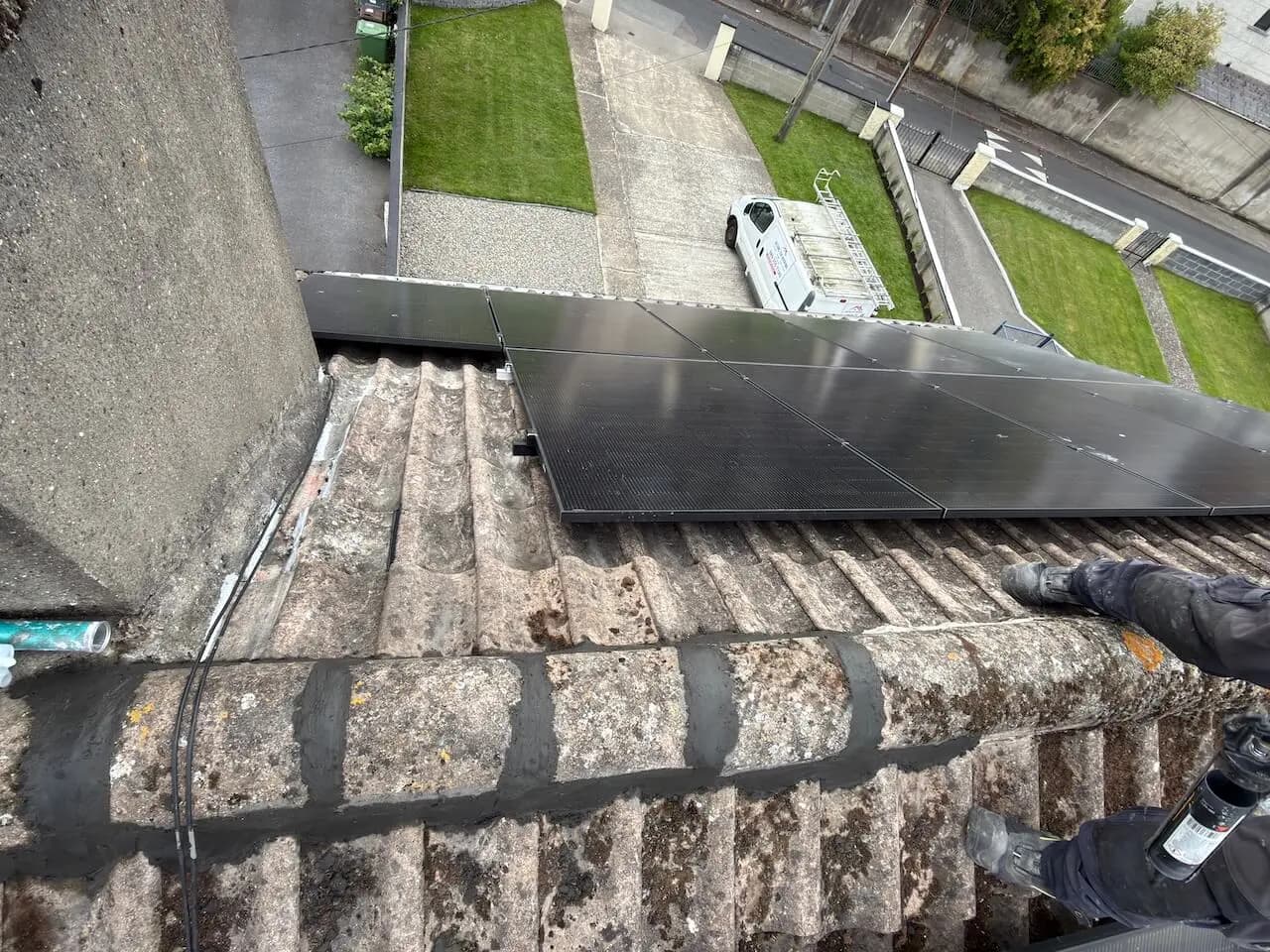
Ridge caps are the shaped tiles covering the joints where roof slopes meet. On a mortared roof, the exposed mortar around them is called pointing. The close-up below shows a cracked joint before it was renewed.
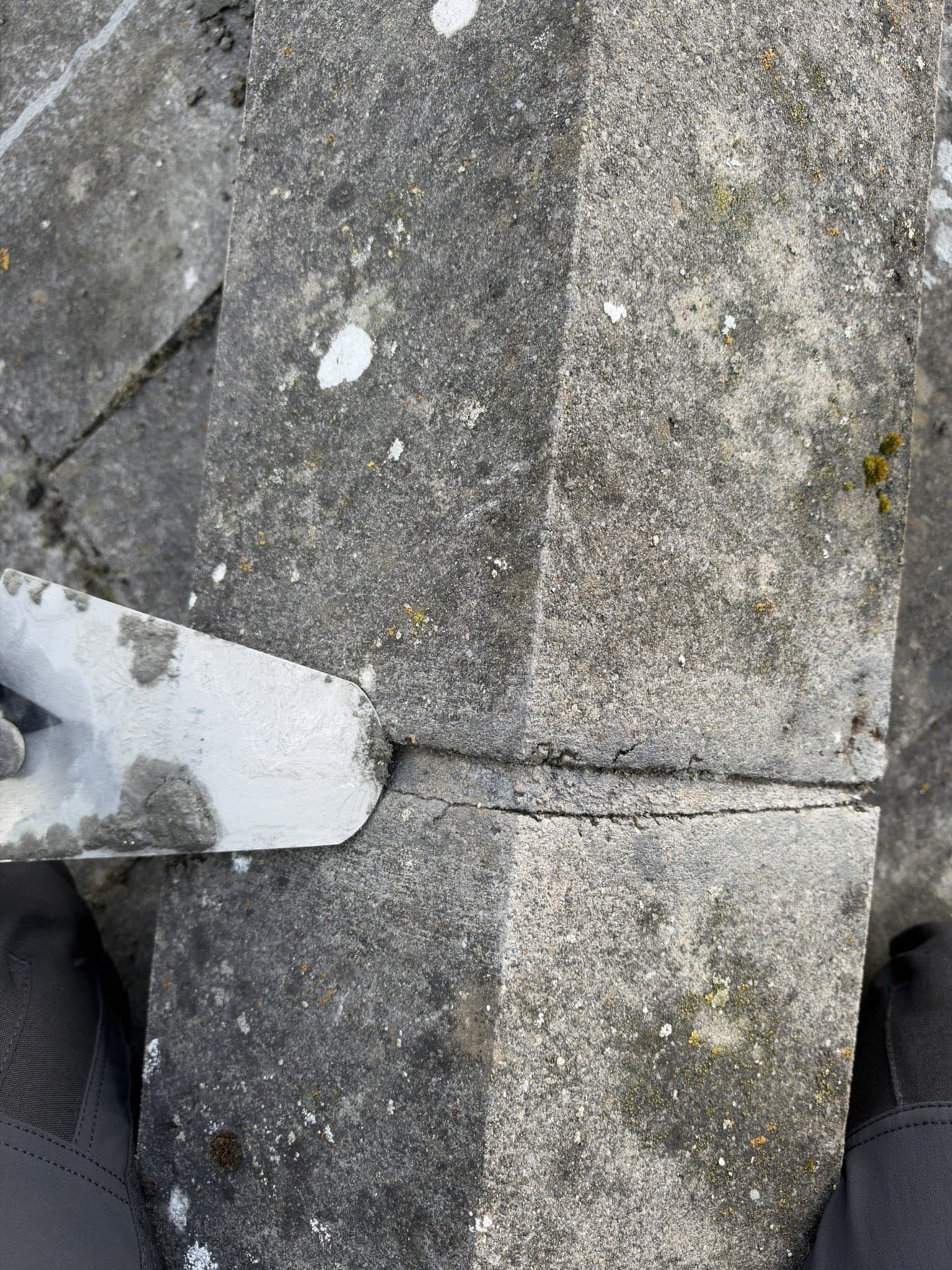
The cracked ridge joint before repointing. The photograph shows the exposed mortar, rather than the bedding beneath the cap.
We repointed the ridge caps on this roof. Repointing renews the exposed mortar; it is different from lifting a cap and renewing the mortar bed that holds it in place. A loose cap or failed bedding needs assessment before deciding whether repointing is enough.
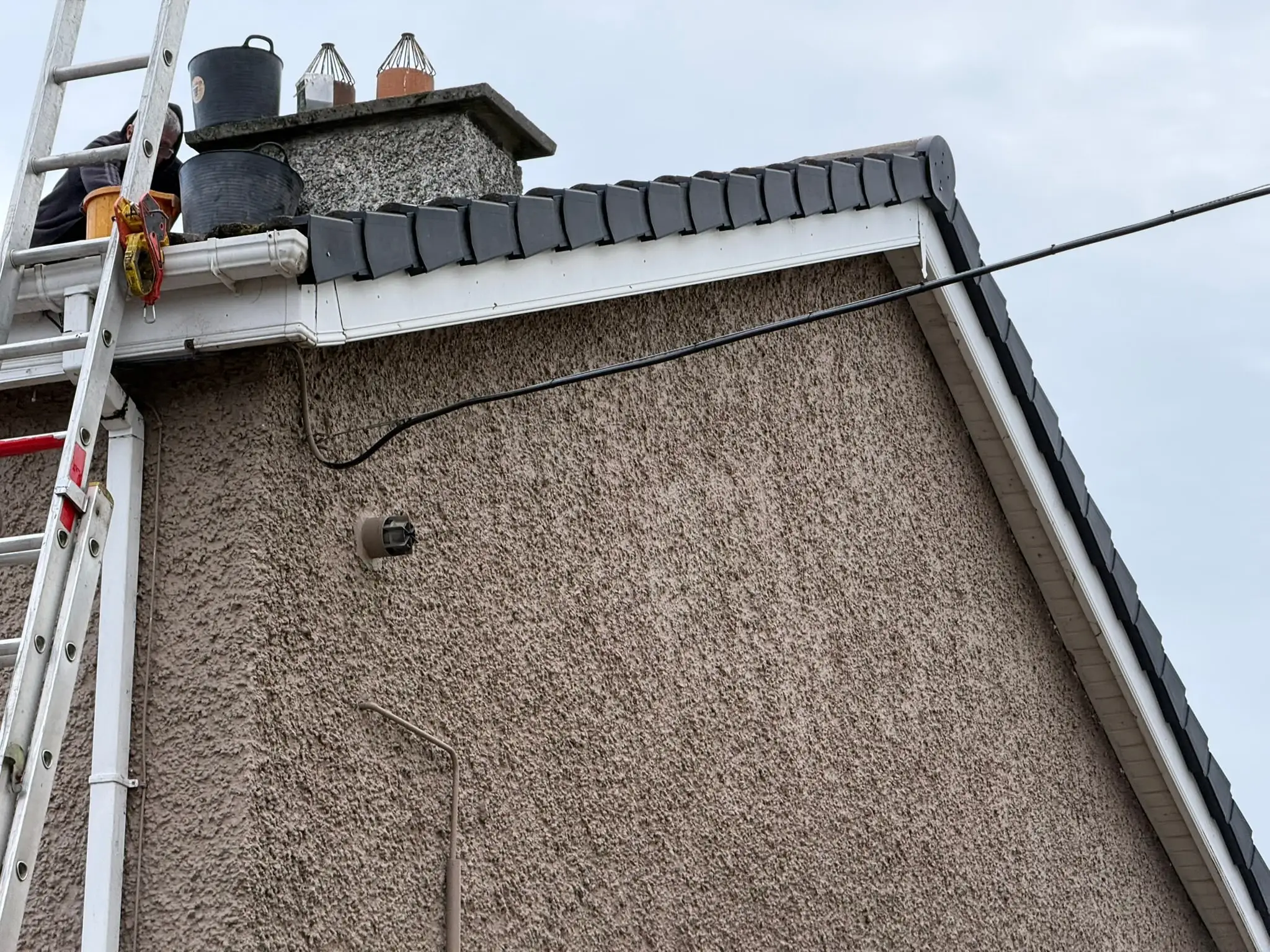
We also installed dry verge covers along the gable edges. A gable verge is the sloping outer edge of the tiled roof. These covers protect the tile ends and give the edge a consistent finish.
A dry verge and a dry ridge are different systems. This job combined dry verge covers at the edges with mortar repointing around the ridge caps. If those terms appear on your quote, our dry verge and ridge installation page explains the options.
Repairing the chimney and valley leaks
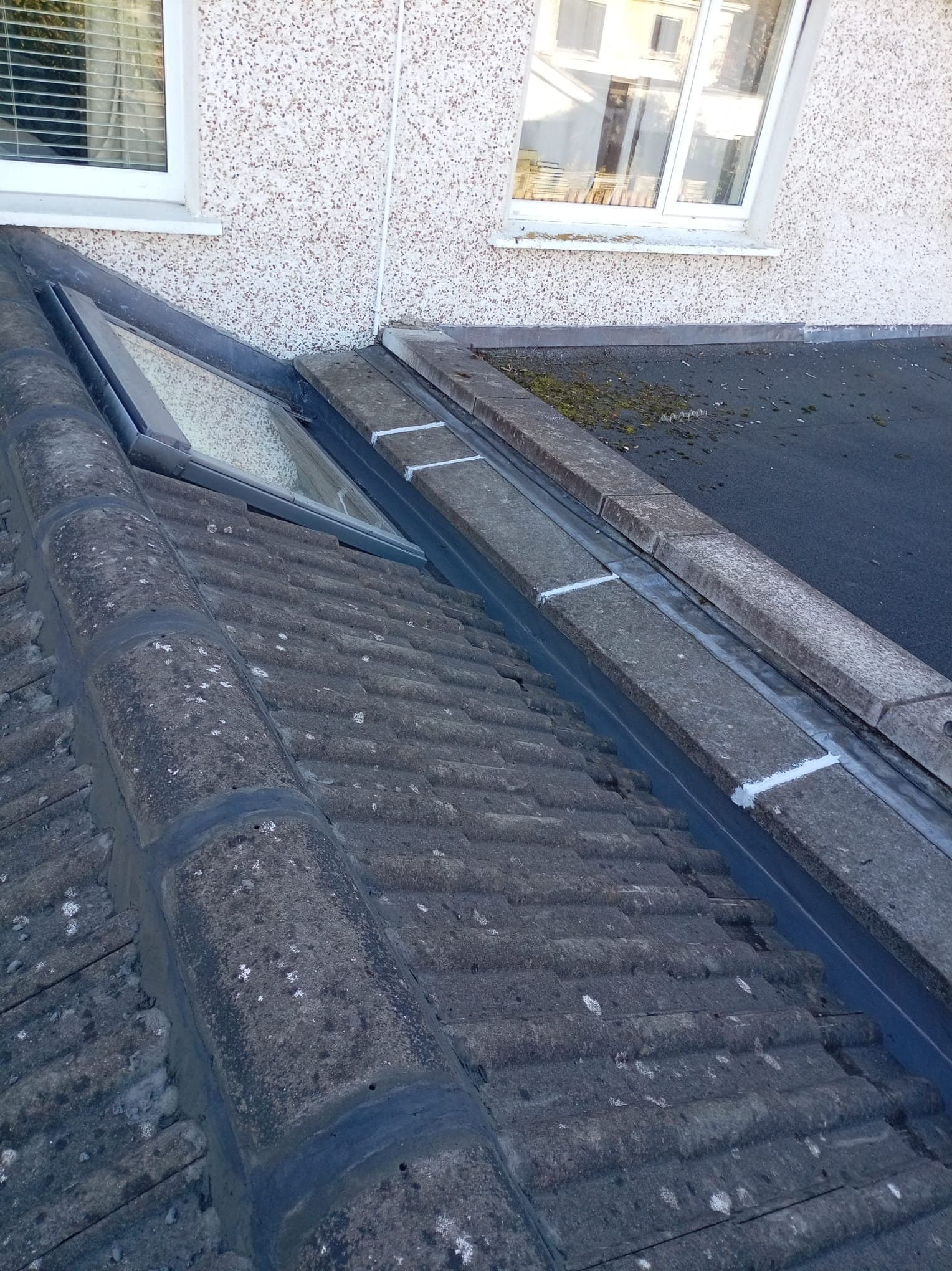
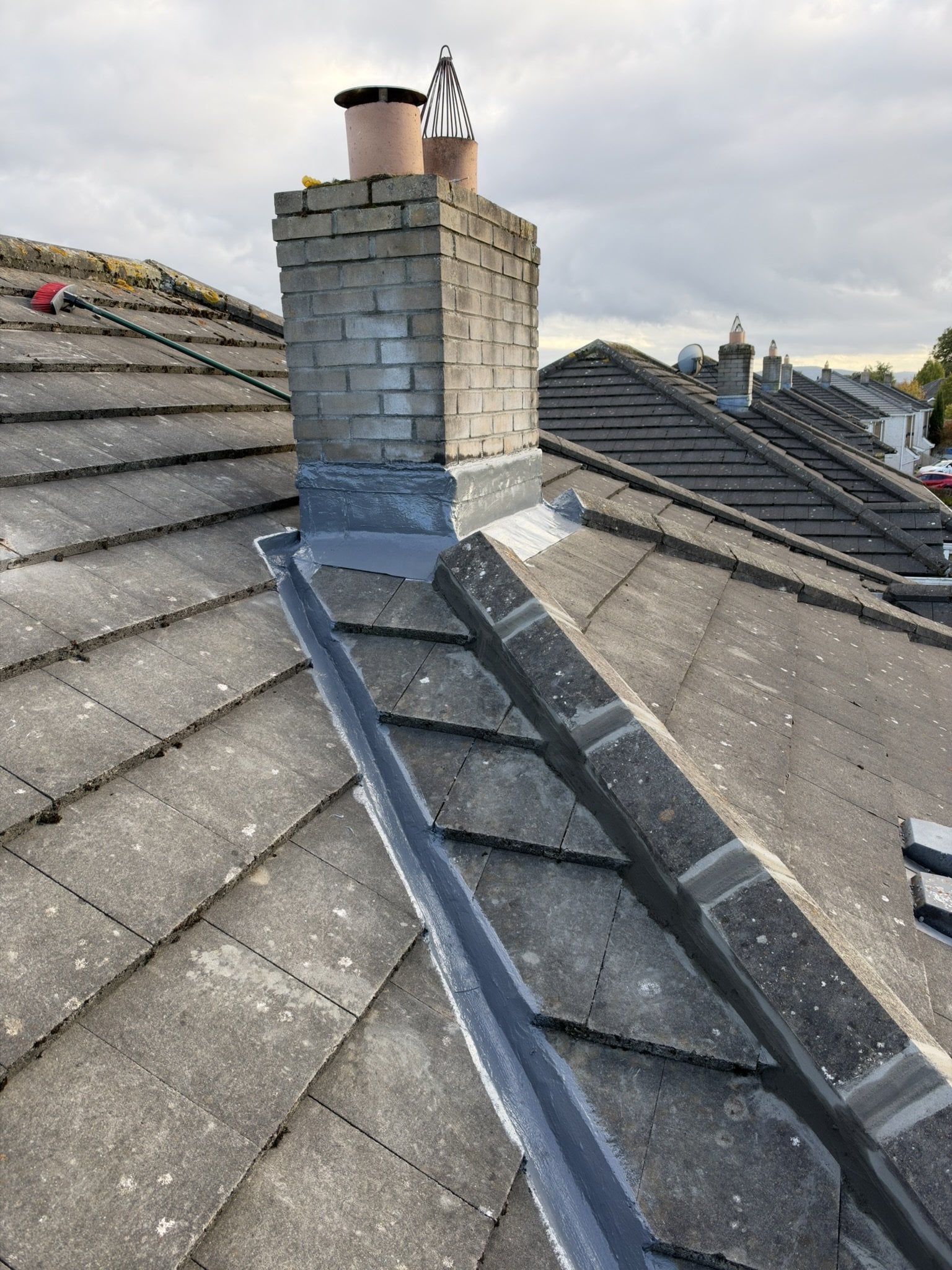
The chimney interrupts the roof covering, so the junction around its base needs to keep rain out. The valley is the channel between two roof slopes. It carries water down the roof, making its condition and drainage important.
The homeowner reported leaks at both details. We repaired the affected areas and applied Mariseal 250 liquid waterproofing. The finished photographs show grey coating around the chimney base and along the valley.
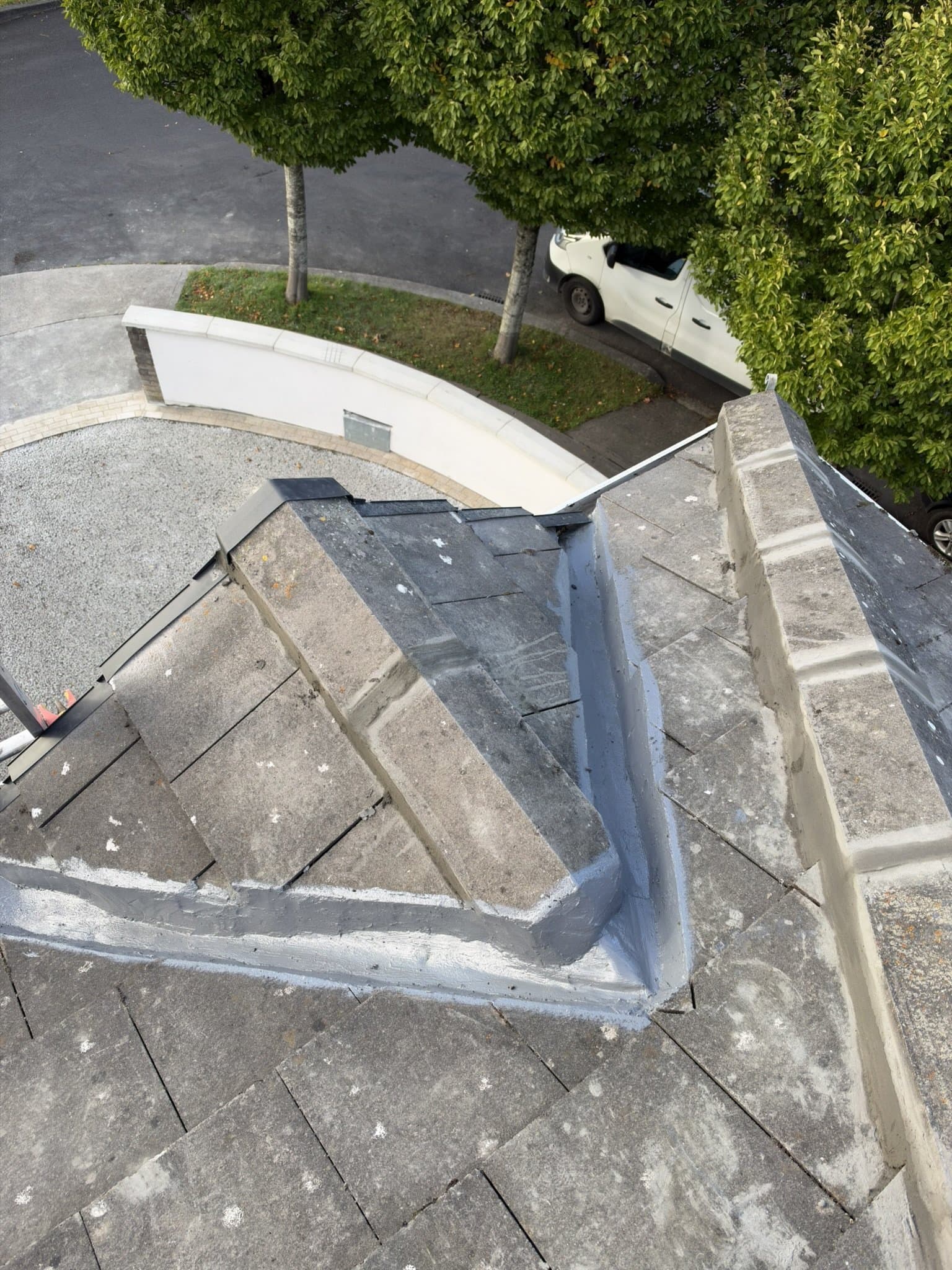
The valley after waterproofing, with renewed mortar at the roof junctions and protective verge covers visible along the outer edges.
Mariseal 250 is a liquid-applied waterproofing membrane: a coating that forms a protective layer as it cures. The manufacturer’s technical data sheet explains the importance of surface preparation and treating cracks and joints as part of the system.
That does not make a coating suitable for every leaking chimney or valley. Loose materials, damaged flashing or a valley that cannot drain properly may need other repairs. The proposed scope should explain what needs putting right before waterproofing is applied.
On this job, the photographs document the visible finish. They do not show a chimney rebuild, replacement leadwork or a full roof replacement, so we have not described the work in those terms.
Why we also fitted attic vents
Condensation forms when moist air meets a cold surface and turns into water droplets. Moisture from everyday activities inside a home can reach the attic and settle on cold roof surfaces. SEAI explains this process in its guide to home ventilation.
Repairing a rain-entry point does not remove that indoor moisture source. For this roof, we fitted vents to improve airflow in the attic and help reduce condensation.
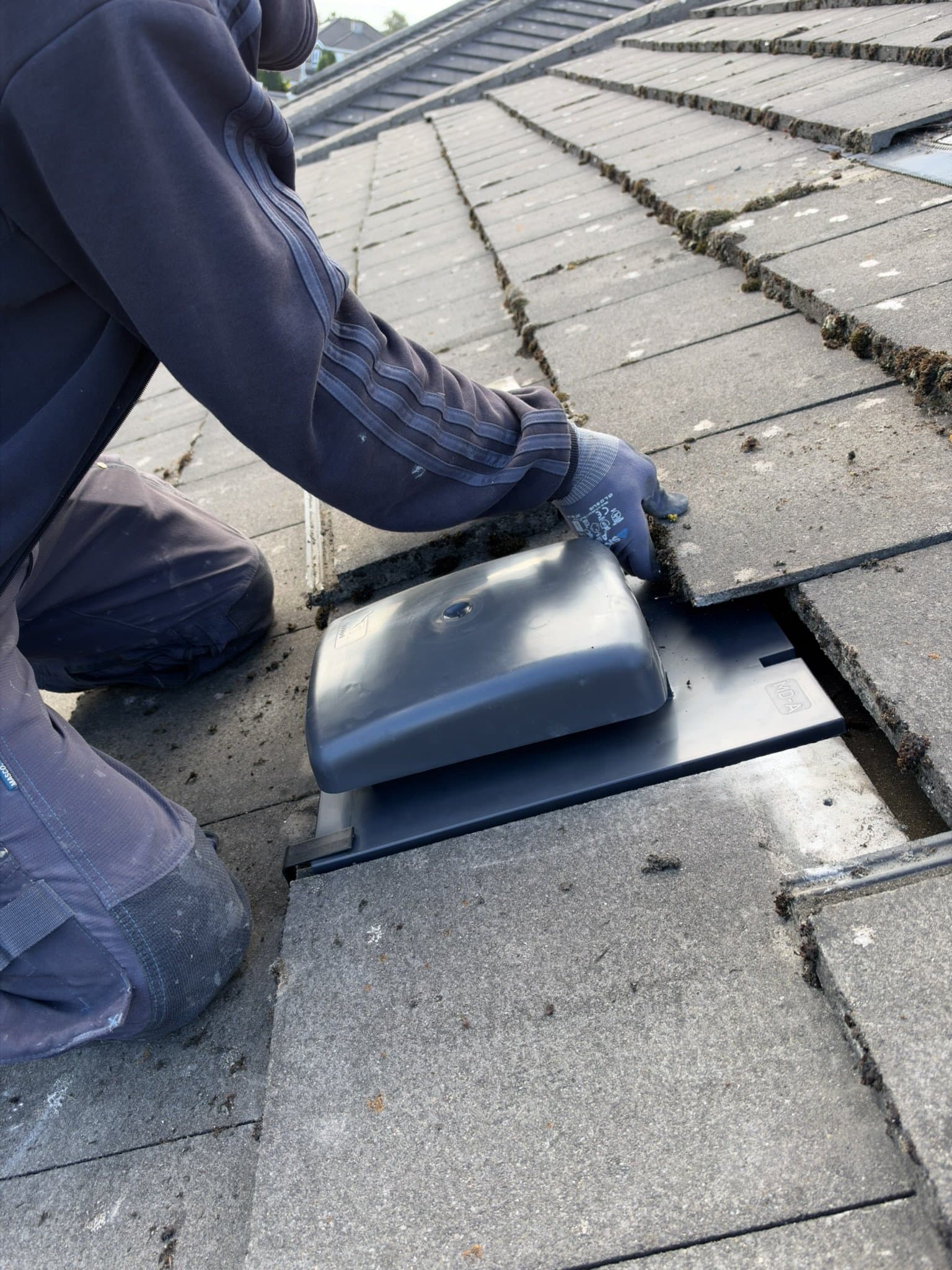
Fitting a roof vent as part of the work to address attic condensation.
The ventilation arrangement needs to suit the roof. Existing air paths, insulation position and the layout of the attic all matter. Adding vents should follow an assessment of how air can move through the space, rather than copying the number visible on another house.
Ventilation also needs to work alongside moisture control inside the home. If damp persists, bathroom or kitchen extraction and its ducting may need checking. An extractor should discharge outdoors, rather than release moist air into the attic.
The new vents were installed to address the reported condensation. A finished roof photograph cannot measure attic humidity or prove how the space performs through colder weather. Monitoring after the work helps establish whether further attention is needed.
Useful observations before a roof assessment
Record when damp appears, rather than trying to diagnose the cause from the colour of a stain. Rain timing, the position of a mark and changes between wet and dry days help a roofer plan the assessment. They are clues, not a certain diagnosis.
Keep your own observations to safe positions indoors and at ground level. You do not need to climb onto the roof or enter an unboarded attic to gather useful information.
Record roof damp safely before an assessment
Gather a short record from safe indoor and ground-level positions. These observations help an assessment; they do not diagnose the moisture source.
Supplies Needed:
- Notes app or notebook
Tools Needed:
- Phone camera
Step 1: Photograph the visible mark
Take a picture from a safe indoor position. Note which room it is in and whether it is near a chimney or roof junction.
Step 2: Record the weather and timing
Write down whether the mark appeared during rain, afterwards or in dry weather. Note any change over the following days.
Step 3: Note other moisture concerns
Tell the roofer about any attic damp already observed, recent insulation work or problems with extraction. Do not enter an unsafe roof space to investigate.
Questions about combined repairs and ventilation
Frequently Asked Questions
Ask for a scope that explains each repair
For combined work, ask which items address rain entry and which address attic moisture. The quote should identify the ridge and verge work, the chimney and valley repairs, and the proposed ventilation arrangement. It should also explain any findings that could change the scope.
Access, roof height and pitch, the amount of mortar work, and the condition of the junctions all affect the price. There is no published price for this Clonsilla job. Our Dublin roofing guide prices provide broader context, with the final quote depending on assessment.
For roof repairs in Clonsilla, send the details you have safely recorded or request a roof assessment. We are based in Blanchardstown, Dublin 15, and can explain the work your roof needs in ordinary language.
Get a clear plan for your roof
Tell us about the leaks or attic damp. We will assess the roof and explain the proposed repairs and any ventilation work.
✅ Free Quote • No Hidden Costs • Same-Day Response