
The 40-Year Roof Cycle: Common Repairs in Lucan, Clondalkin & Leixlip
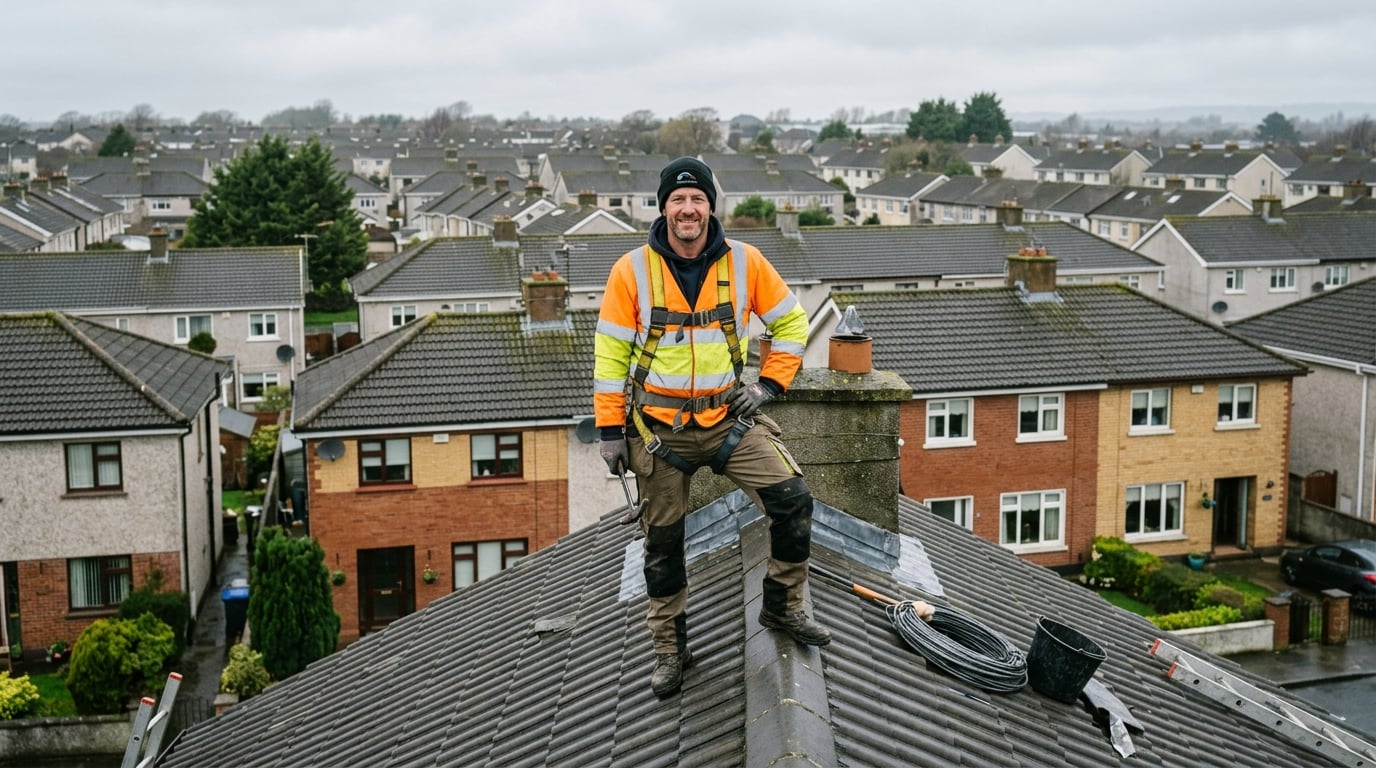
A note from the Founder of Secure Top Roofing. With over 17 years spent on rooftops across West Dublin and North Kildare, I've noticed a distinct pattern. The beautiful housing estates built throughout the 1970s and 1980s in areas like Lucan, Clondalkin, and Leixlip are all hitting a critical 40-year milestone. In this guide, I'll walk you through exactly what we see failing on these properties right now, so you can address small problems before they turn into major indoor leaks.
If you live in West Dublin or North Kildare—particularly in a house built during the massive expansion of the 1970s and 1980s—you've probably noticed an increase in your neighbours having scaffolding erected. You aren't imagining things. From the Liffey Valley in Lucan to the River Forest estate in Leixlip, these roofs are collectively reaching the end of their original factory-installed lifespans.
Quick Answer: The Top 3 Issues on 1970s/1980s Roofs in West Dublin
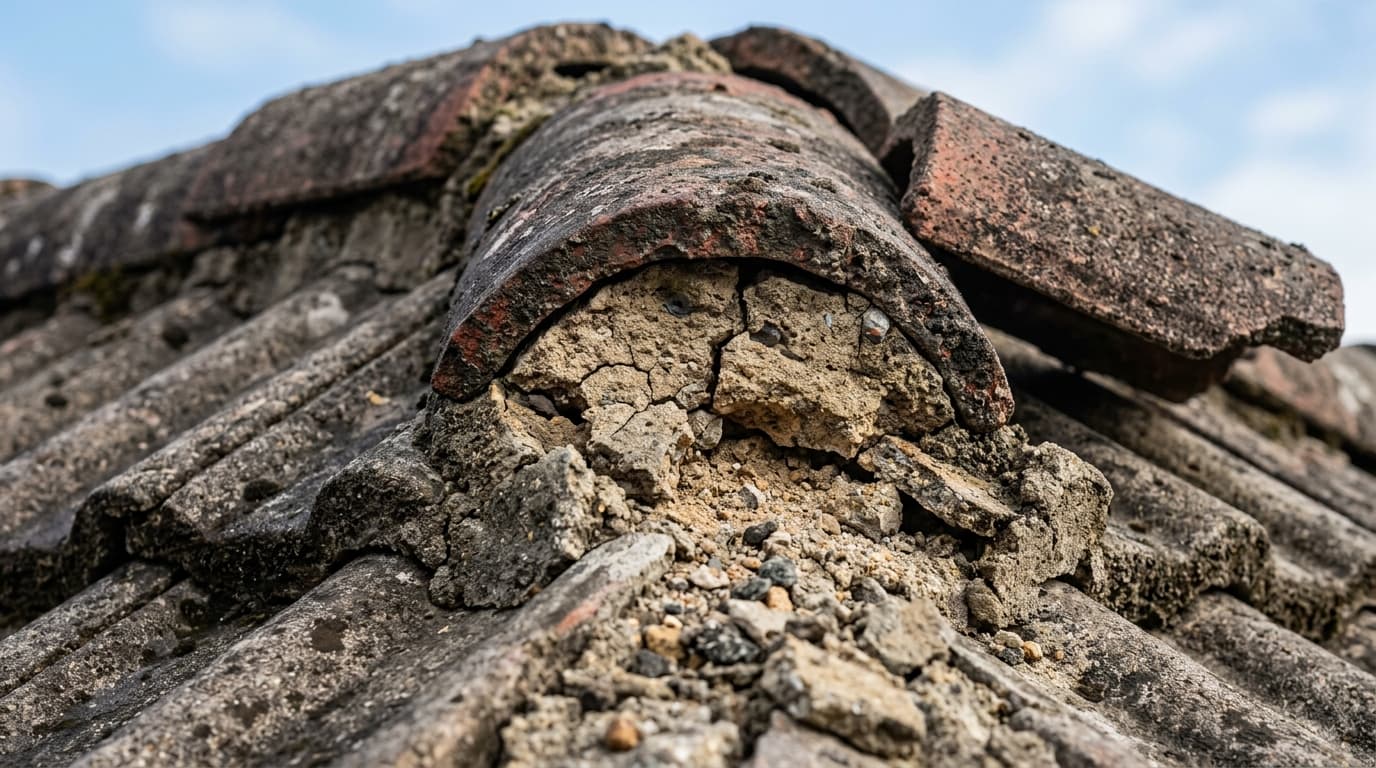
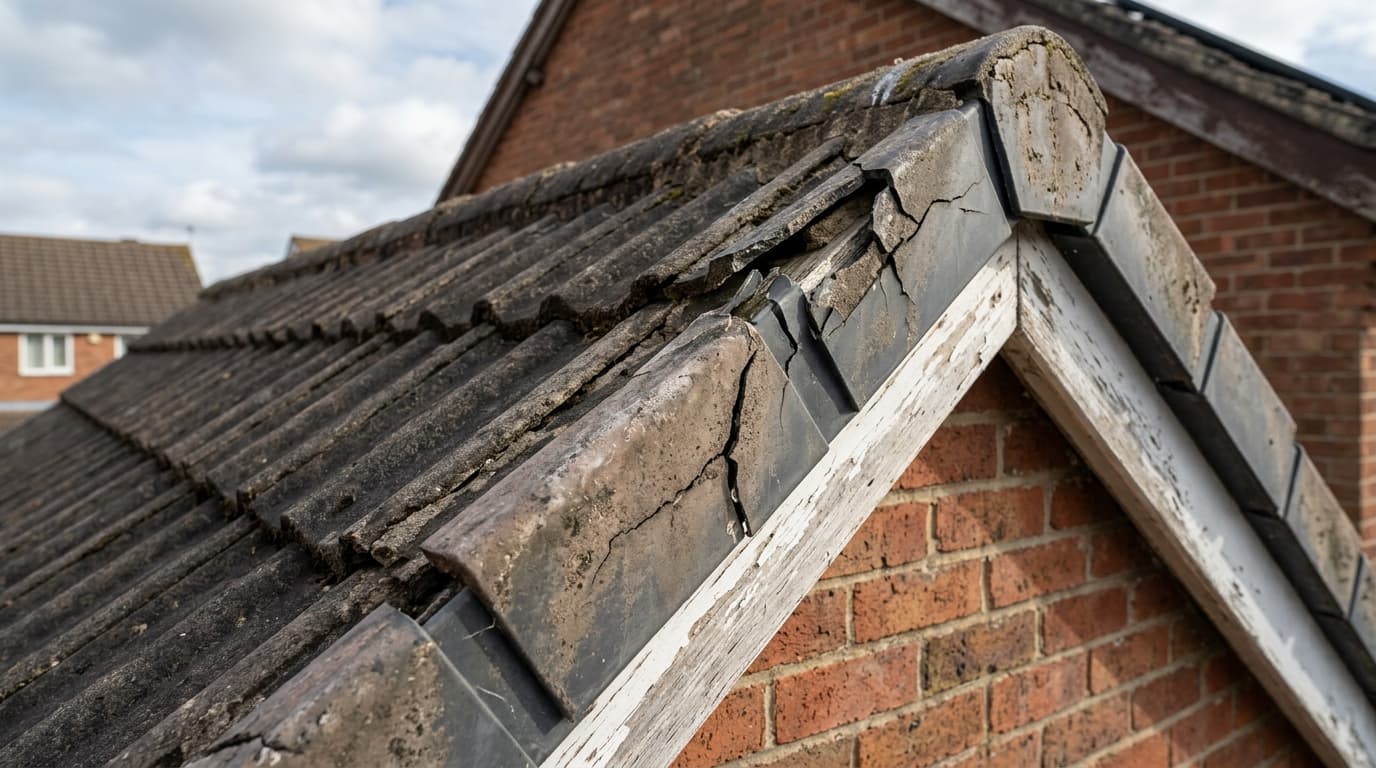
- Decarbonated Ridge Cement: The original mortar holding the peak of your roof together has turned to dust, causing loose ridge tiles.
- Perished Felt Underlay: The bitumen-based felt installed 40 years ago has gone brittle and cracked, meaning any water that gets past a slipped tile goes straight into your attic.
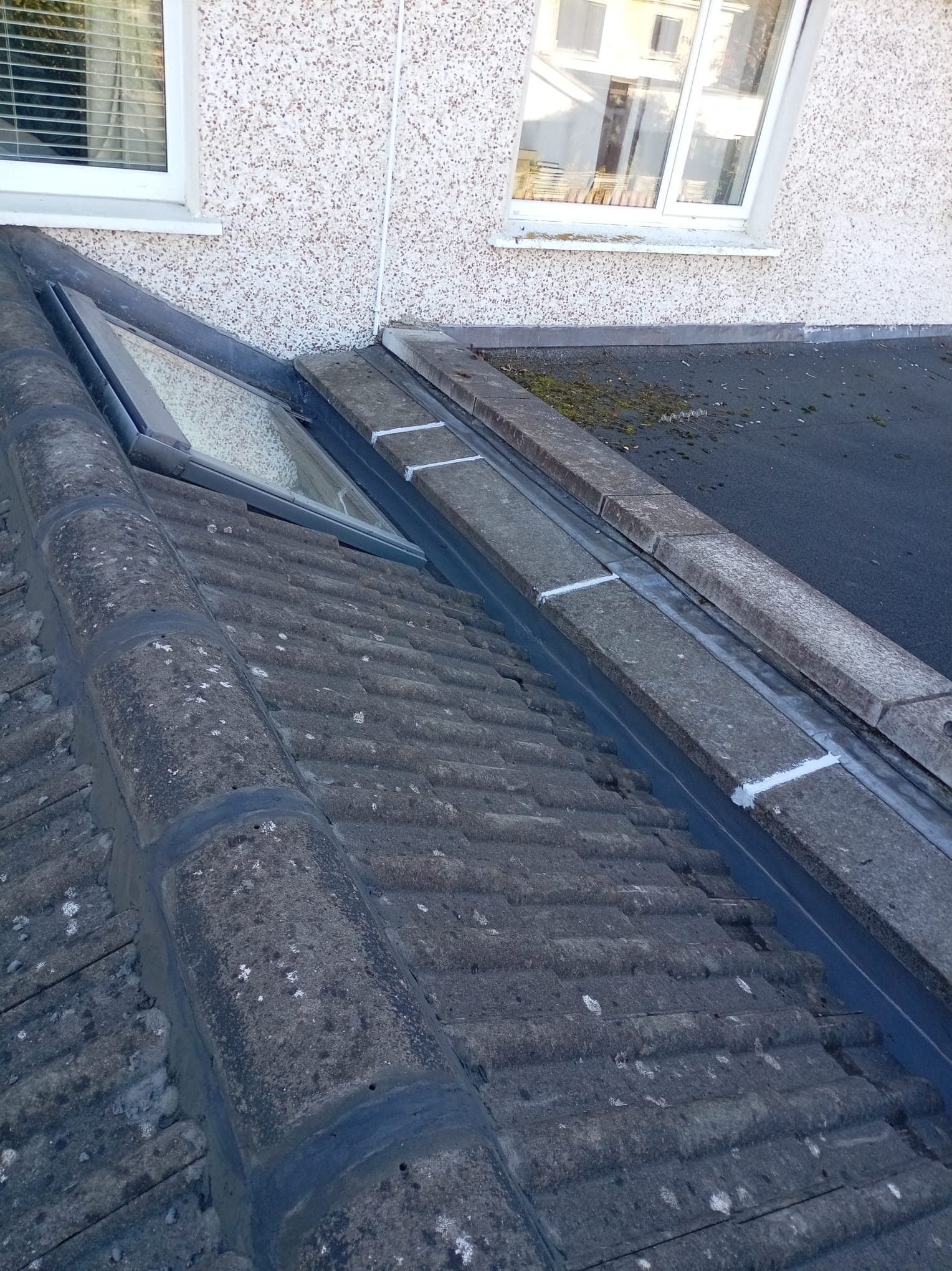
- Thinned Lead Valleys: Particularly on dormer bungalows (common in Clondalkin and Lucan), the lead in the roof valleys has expanded and contracted for four decades and is now splitting.
Keep reading for our complete guide to managing your 40-year-old roof...
The West Dublin Development Boom and Your Roof
During the late 70s and 80s, vast estates were built across Clondalkin, Lucan, and Leixlip. While these homes were built solidly, the roofing techniques of the era relied heavily on wet-mortar bedding (cement) and early forms of bitumen roofing felt.
After 40 to 50 winters of Atlantic storms and persistent Irish drizzle, these specific materials naturally fail. It isn't a sign of poor initial workmanship; it is simply the end of the chemical lifespan of the materials used.
Need Fast Roof Repair?
Get rapid response from Dublin 15's roofing specialists within 2 hours, even on weekends and evenings.
⚡ 24/7 Emergency Response Available
Spotting the Warning Signs Before a Leak
You don't need to climb a ladder to spot the early warning signs that your 1980s roof is struggling. Look for:
- Chunks of cement on your driveway or patio: This is the classic sign of ridge cement decarbonation.
- Daylight visible in your attic: If you go into your attic on a bright day with the lights off and see pinpricks of light through the felt, your underlay has perished.
- Moss overload: Excessive moss acts like a sponge, keeping 1980s concrete tiles permanently damp and increasing their weight.
- Water stains in upstairs corners: This usually indicates a failing dry-verge or a blocked valley.
Specific Challenges by Area: Lucan, Clondalkin & Leixlip
Every area has its own architectural quirks and micro-climates. Here is what our crews are fixing most frequently across these three specific areas:
1. Clondalkin: The Dormer Valley Challenge
The 1970s detached housing stock across the Clondalkin estate belt (areas like Newlands, Neilstown, Ronanstown, and Quarryvale) features a lot of dormer pitches. These dormers rely on lead-lined valleys to channel water away.
After 45+ years, the original lead has thinned, and the felt underneath has perished. Patching these valleys with bitumen or mastic simply does not hold anymore. When providing roof repair in Clondalkin, our most common job on these estates is a complete strip and re-lay of the dormer face using proper Code 4/5 lead.
2. Lucan: Valley Moisture and Wind Exposure
Lucan features a mix of historic village properties and sprawling modern developments. Properties situated near the Liffey Valley and Griffeen Valley face increased moisture levels, while those on higher ground deal with serious wind exposure during winter storms.
For those requiring roof repair in Lucan, we frequently see storm damage lifting loose ridge tiles. Because the original mortar has failed, a single strong gust can lift three or four tiles at once, leading to an emergency call-out.
3. Leixlip: Ridge Bedding and Brittle Dry-Verges
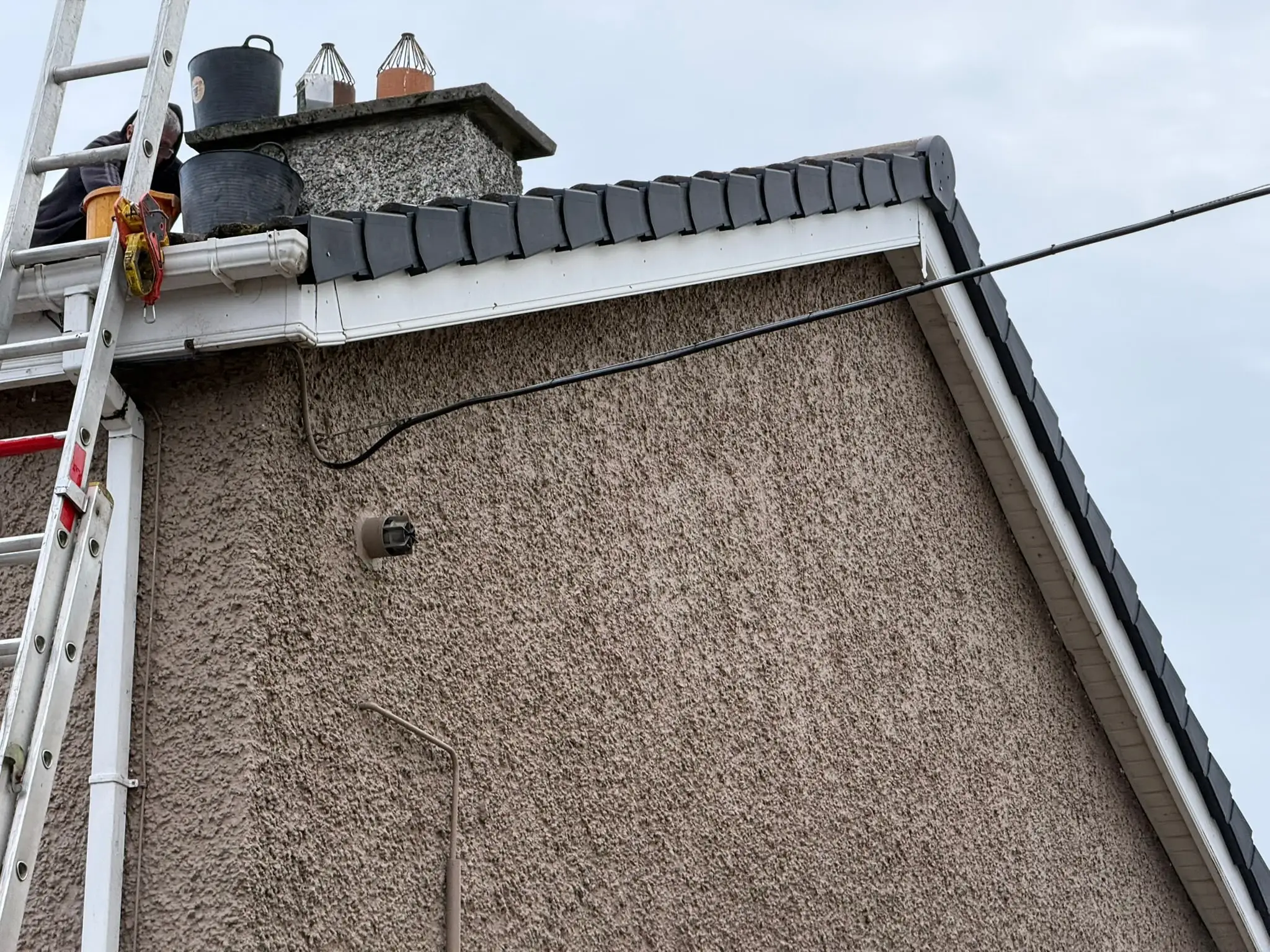
On the Kildare border, the large 1970s to 1990s estates in Leixlip (such as River Forest, Easton, and Confey) were built using factory wet-mortar bedding and early plastic dry-verge systems on the gables.
At 25-40 years old, that plastic dry-verge has become completely brittle and easily snaps off in high winds. When we do roof repair in Leixlip, we frequently strip the failed mortar completely and re-bed the ridges with a modern, mechanically fixed dry-ridge system that won't crack or decarbonate like the original cement.
How to Check Your Roof's Health Safely
The 10-Minute Ground-Level Roof Inspection
How to check the health of your 1970s/1980s roof without ever leaving the ground.
Tools Needed:
- Binoculars (optional)
- Smartphone camera (with zoom)
Step 1: Check the Ridges
Stand across the street from your home. Look at the very top line of tiles (the ridges). Are they sitting perfectly straight, or are some slightly crooked? Crooked tiles indicate the mortar holding them has failed.
Step 2: Scan the Valleys
Look at where two roof pitches meet (the valleys). Can you see a buildup of moss or debris? Blocked valleys are the number one cause of heavy rain overflowing directly into your attic.
Step 3: Inspect the Gable Edges
Look at the side edges of your roof (the verges). If you have plastic caps, are any missing or cracked? If you have cement verges, can you see cracks or missing chunks?
Step 4: The Attic Sniff Test
Go into your attic on a dry day. Does it smell musty or damp? Check the roof timbers for dark water stains, especially around the chimney breast and the valleys.
How Secure Top Roofing Fixes the 40-Year Problem
When we assess a 1970s or 1980s roof in West Dublin, our goal isn't to push you into a full replacement if it isn't necessary. Often, the concrete tiles themselves are still structurally sound—it's only the fixings (the mortar, the felt, the lead) that have failed.
We've helped hundreds of homeowners across Lucan, Clondalkin, and Leixlip stop the cycle of patching and hoping. We strip away the failed 1980s materials and upgrade your roof using modern, dry-fix systems. This means no more cracking cement, no more brittle plastics, and a roof that is ready for the next 40 years of Irish weather.
Every quote we provide lists the exact materials by name and grade, so you know exactly what is going onto your home.
Frequently Asked Questions
Common Questions About West Dublin Roof Repairs
It depends entirely on the condition of your tiles and timber. In many Clondalkin and Lucan estates, the concrete tiles are still viable. By replacing the perished felt, upgrading to a dry-ridge system, and re-leading the valleys, we can often save the roof without the cost of a full replacement. We will always give you an honest assessment during our inspection.
Don't Wait for the Next Winter Storm
If your home in Lucan, Clondalkin, or Leixlip was built in the 1970s or 1980s, your roof is in its most vulnerable phase. The original materials have reached the end of their lifespan, and a proactive inspection today can save you thousands in internal water damage tomorrow.
We know the local housing stock intimately, and we know exactly what fails and why. Let us give you the peace of mind that your home is secure for the decades ahead.
Secure Your 1980s Roof Today
Don't wait for a leak to reveal failed mortar or perished felt. Get a professional assessment from your local West Dublin roofing experts.
✅ Free Written Quote • Honest Local Advice • 10-Year Workmanship Guarantee