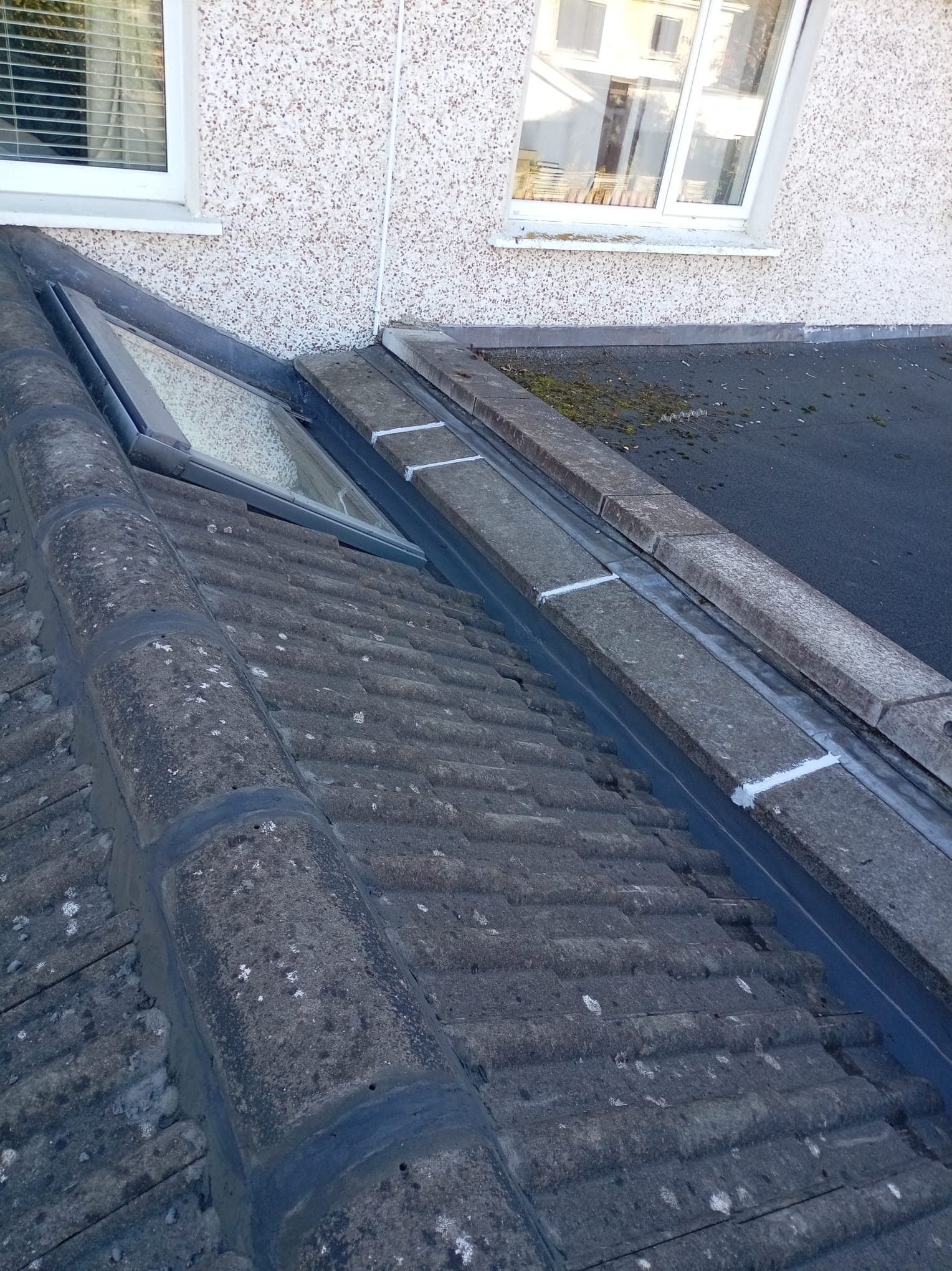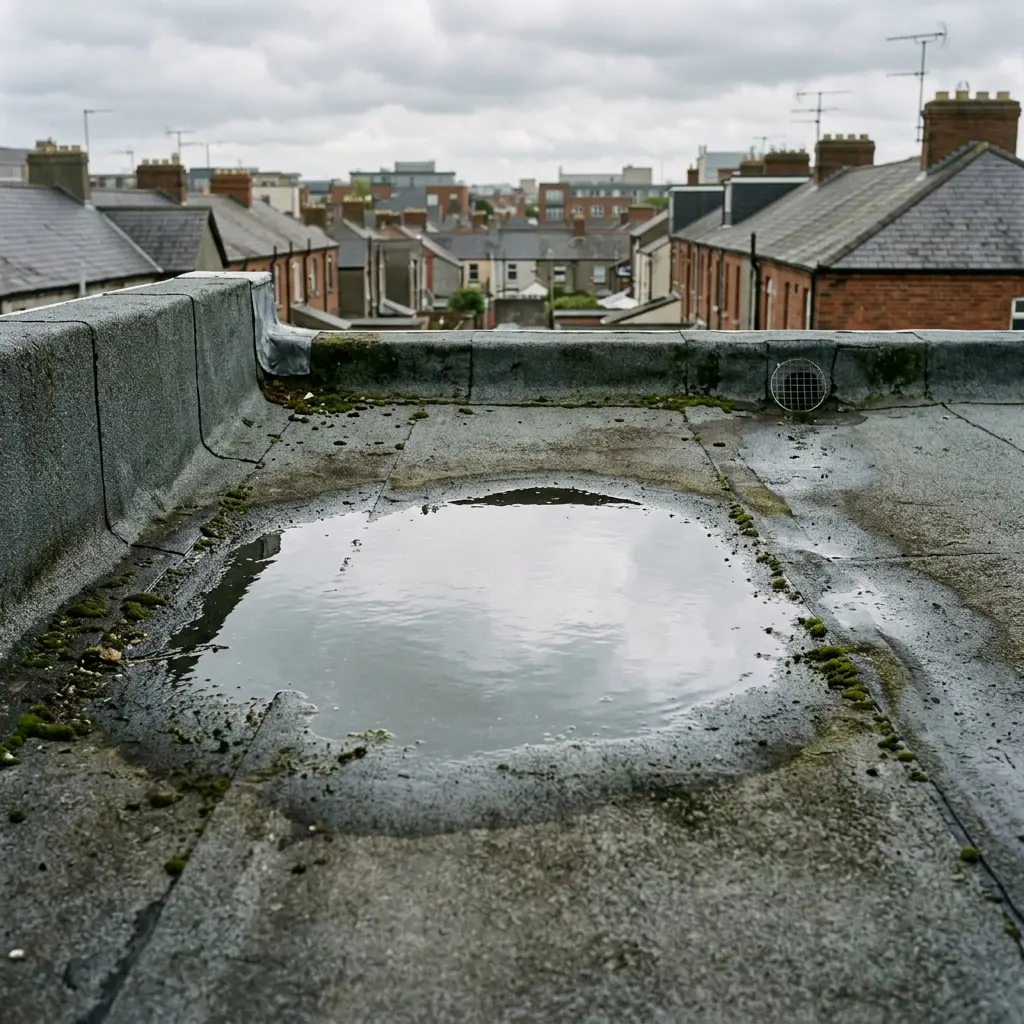

Water pooling on a flat roof after rain is not automatically an emergency. A shallow film that clears may simply show where water slows, while a recurring pool in the same hollow can point to restricted drainage, poor falls or movement in the roof beneath it.
The useful question is not only how long the water has been there. Its depth, position and the condition of the membrane around it tell you far more about the likely risk.
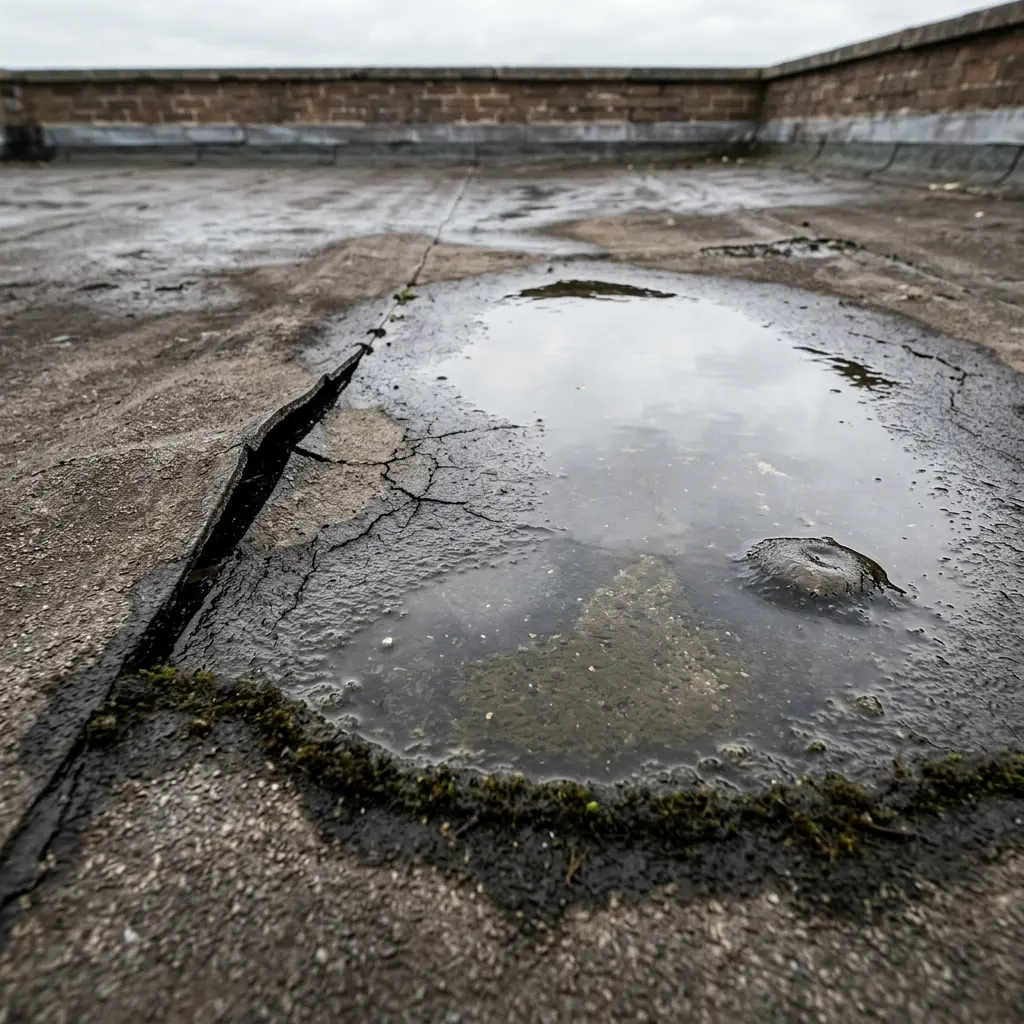
Water pooling becomes a problem when it repeatedly remains in the same low area, reaches vulnerable laps or upstands, or appears beside cracks, open seams, blisters or a soft roof deck. A small amount that clears after rain, with no membrane damage or indoor damp, can usually be recorded and monitored. Arrange a prompt inspection if the pool keeps returning. Treat active water ingress, a sagging ceiling or a visibly deflected roof as urgent.
Unsure What the Pooling Means?
Send safe ground-level photos or arrange an inspection for a clear explanation of the drainage problem and repair options.
✅ Free Quote • No Hidden Costs • Same-Day Response
Table of Contents
- Is standing water normal?
- Why water pools after rain
- When ponding becomes a repair issue
- What surface changes mean
- Repair or replacement options
- What to record before an inspection
- Frequently asked questions
Is Any Standing Water on a Flat Roof Normal?
A flat roof is not normally built as a perfectly level tray. It should have a slight slope, called a fall, which directs rain towards an outlet, hopper or external gutter. The fall may be formed in the structure or with tapered insulation.
Immediately after heavy rain, you may still see a thin film or small local water checks around membrane laps. That observation alone does not prove the waterproofing has failed. Current technical guidance even distinguishes short-term water held at laps from wider drainage defects.
There is no useful universal rule saying every puddle becomes a failure after one fixed number of hours. Different membranes, roof build-ups and weather conditions behave differently. Evaporation is also slower during cool, damp Dublin weather, so time needs to be considered alongside the other evidence.
What matters more is whether the water:
- returns to the same depression after ordinary rain;
- is deep enough to cover laps, repairs or the base of an upstand;
- sits far from the intended drainage point;
- remains while the surrounding roof has dried;
- spreads or becomes deeper over time; or
- appears with an indoor leak, staining or movement in the deck.
Irish Technical Guidance Document H covers surface-water drainage, gutter capacity and rainwater disposal. On an existing domestic flat roof, an inspection still needs to consider the installed system, its condition and the route water is meant to follow.
Four Reasons Water Pools After Rain
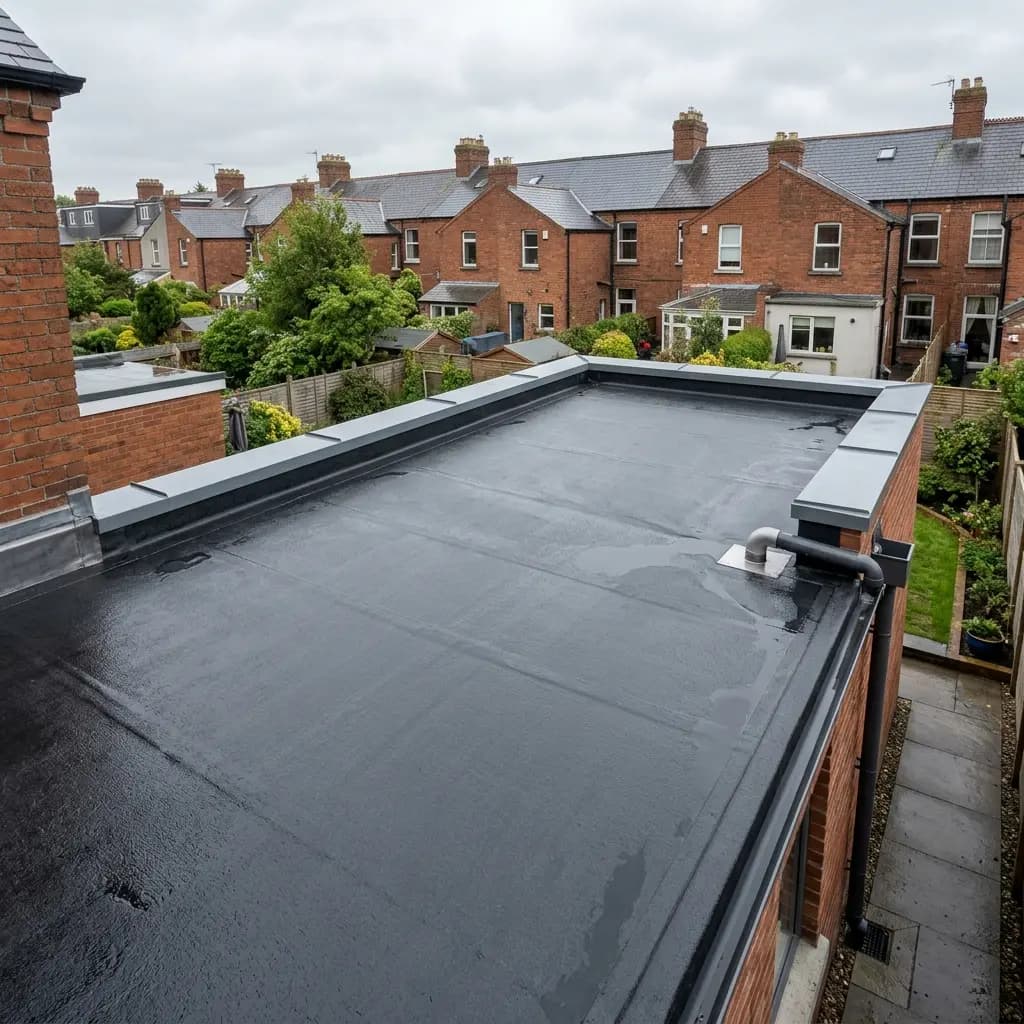
Water collects because it cannot reach or pass through the drainage route quickly enough. The visible pool shows the low point, but it does not tell you which of the following causes created it.
1. A restricted outlet or gutter
Leaves, moss, silt or debris can slow an outlet, hopper or gutter. Water may then spread back across the roof even when the roof falls are otherwise reasonable.
The obstruction may be at the visible opening, inside the downpipe or farther along the drainage system. Clearing what you can see from a window does not confirm that the full route is open.
2. Poor or interrupted falls
Some roofs were built with too little slope. On others, a raised repair, thick membrane lap or badly positioned outlet interrupts the intended flow and creates a small dam.
This is why applying another coating over the low area may not solve the problem. It can waterproof the surface without giving the water a better route away.
3. Deck movement or deflection
A timber deck can dip if supporting members move, timber deteriorates or loads are not being carried as intended. Insulation can also compress within some roof build-ups. Either change can form a hollow that was not present when the roof was first completed.
A visible dip needs more care than an isolated surface puddle. Do not walk across it to test whether it feels soft.
4. Alterations around the roof
New rooflights, kerbs, services, edge details or previous patches can change how water moves. A new extension may also receive water from a higher roof or downpipe, placing more flow into one part of the flat roof than its drainage arrangement was designed to handle.
This is especially relevant on garage and extension roofs, where small changes can redirect a large part of the runoff towards one outlet.
When Ponding Water Becomes a Repair Issue
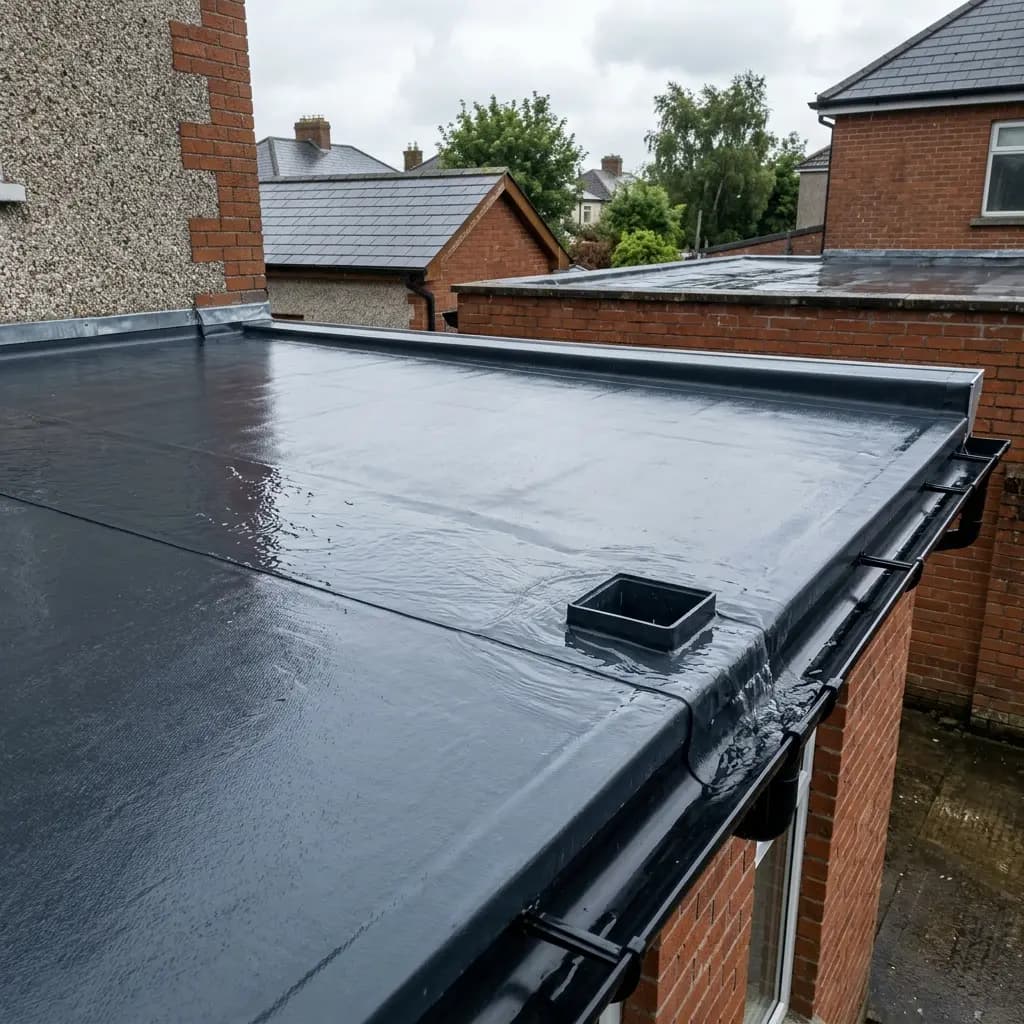
Use the following table as an urgency guide, not a diagnosis. If you cannot see the roof safely from inside the property or ground level, leave the exterior assessment to a roofer.
| What you can observe safely | What it may mean | Sensible next step |
|---|---|---|
| A thin film or small shallow area clears, with no visible damage or indoor damp | Water is slowing locally, but there is no clear evidence of failure | Photograph it after rain and compare during the next few weather events |
| A pool returns in the same place after ordinary rain | A stable low point, interrupted fall or slow drainage route may be present | Arrange a non-emergency inspection before the affected area deteriorates |
| Water reaches a lap, previous patch, rooflight kerb or wall upstand | The pool is repeatedly testing a vulnerable junction | Arrange a prompt inspection and ask for the drainage route and detail to be checked together |
| The pool is beside cracking, an open seam, lifting felt or widespread blistering | The waterproof layer may already be compromised | Keep off the roof and arrange prompt assessment |
| The roof looks newly dipped, rippled or lower than before | The deck, insulation or supporting structure may have moved | Treat it as a priority and do not test it by walking on it |
| Water is entering, a ceiling is bulging, or electrics are affected | There is active ingress or an internal safety risk | Keep clear, isolate electricity only if it is safe to do so, and call for urgent help |
The strongest counterpoint is worth stating: some membranes tolerate water better than others, and a watertight roof can hold a small amount without leaking. Even so, recurring ponding can collect dirt, encourage plant growth, hide a developing split and keep junctions wet for longer. It deserves investigation when the pattern is persistent or changing.
If water is already entering the building, use the emergency roof repair route. For dry but recurring ponding, a planned flat roof repair assessment in Dublin is usually the proportionate next step.
What Blistering, Cracks and Soft Areas Mean
Surface changes are important because they show how the waterproofing or the build-up beneath it is behaving. One sign rarely gives the whole answer.
Blisters and bubbles
A blister is a raised area in the membrane. Heat can expand trapped air or moisture beneath some systems, creating a bubble. A blister is not automatically the entry point for a leak, but it can split, stress a lap or show that moisture is trapped in the build-up.
Do not puncture it to see what is inside. That turns a possible weakness into an open hole.
Cracks, splits and open seams
These are more direct concerns because they may interrupt the waterproof layer. Their significance depends on whether the opening reaches through the membrane, where it sits in relation to the pool and how sound the surrounding material remains.
A crack at the edge of standing water is more concerning than superficial crazing on a dry, stable coating. Both still need the material and detail identified before a compatible repair is chosen.
Soft or springy areas
A soft area can indicate wet insulation, deck deterioration or loss of support. You cannot confirm that safely by pressing or bouncing on the roof. A roofer may need moisture diagnostics and, in some cases, a controlled opening to establish how far the affected build-up extends.
Drainage Correction, Local Repair or Replacement?
The right solution needs to address both the water route and any damage already present. Covering the visible pool with another product may hide the symptom while leaving the low point unchanged.
Drainage maintenance or correction
If the roof surface and deck are sound, the work may centre on an outlet, hopper, gutter or downpipe. A contractor might clear the drainage route, correct a local obstruction, improve an outlet detail or add drainage capacity where the wider layout permits it.
Poor falls can sometimes be corrected with tapered insulation or a redesigned outlet position. That decision affects thresholds, upstands and the overall roof build-up, so it should be designed as a system rather than treated as a cosmetic patch.
A local membrane repair
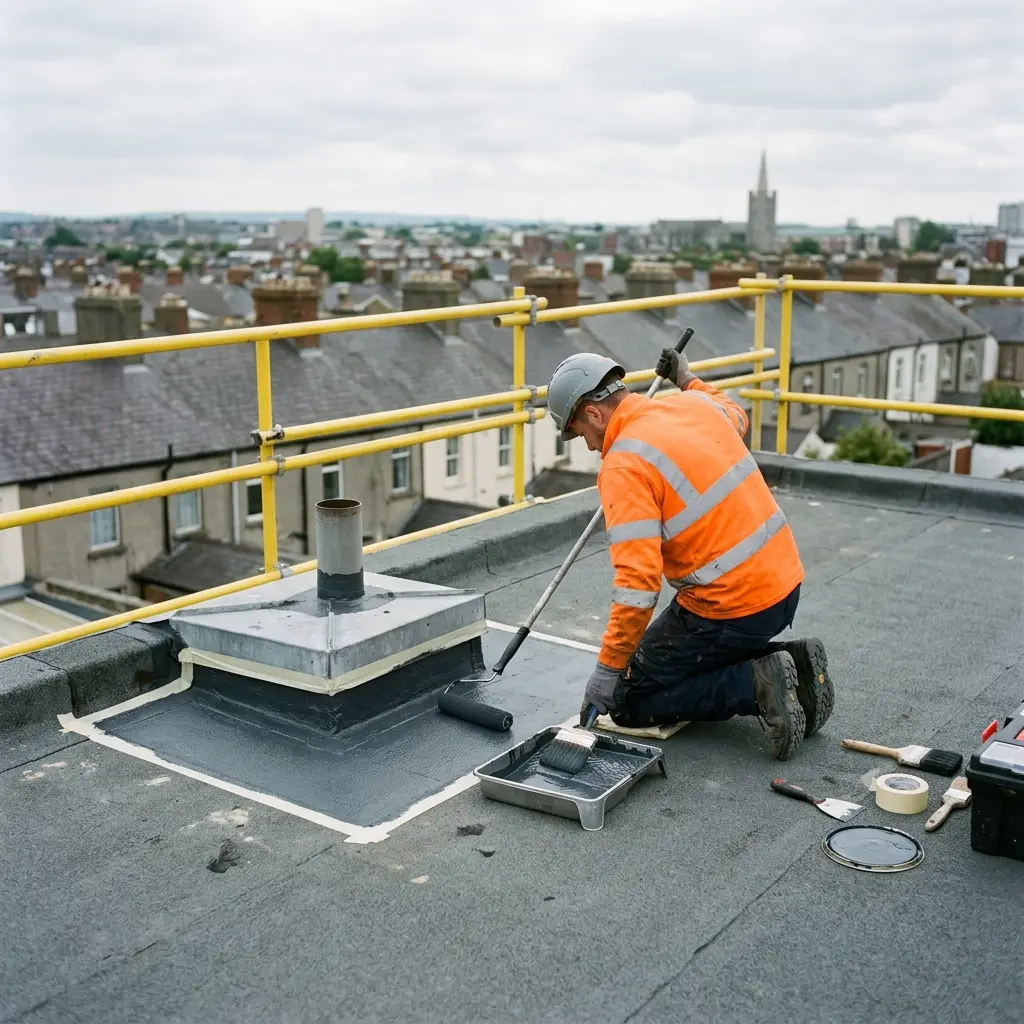
A local repair may make sense where the surrounding membrane is sound and the defect is limited. The roofer still needs to identify the installed system, dry and prepare the area correctly, and make sure the repair does not form another raised barrier across the drainage path.
EPDM rubber, GRP, torch-on felt and liquid-applied systems do not share one repair method. Product compatibility and substrate condition matter.
Wider refurbishment or replacement
Replacement becomes more relevant when ponding is widespread, the deck or insulation is affected, several seams or details have failed, or previous local repairs have not dealt with the falls. It may also be the clearer route when opening one area reveals trapped moisture beyond the visible pool.
That does not mean every roof with standing water needs replacing. Our complete flat roof repair guide explains the wider system choices. A written proposal should separate drainage correction, local waterproofing, deck or insulation work and full renewal so you can see why each item is included.
Cost depends on access, roof size, membrane type, outlet layout, deck condition and how much of the build-up must be opened. Those variables are more useful than a price based on a photograph alone; our Dublin roofing cost guide explains how written quotes are built.
What to Record Before a Flat Roof Inspection
Good photographs and timing notes help distinguish a slow outlet from a stable hollow or a changing deck. Keep every check to a safe viewpoint. The Health and Safety Authority roofwork code explains that flat-roof work still carries fall risks at edges, openings and fragile areas.
How to Document Flat-Roof Ponding Safely
A short observation record that helps a roofer assess the drainage pattern without you accessing the roof.
Supplies Needed:
- Notebook or notes app
Tools Needed:
- Phone camera
Step 1: Choose a safe viewpoint
Use an upstairs window, neighbouring internal room or ground-level position. Do not climb onto the roof or lean out to improve the angle.
Step 2: Photograph the whole roof area
Take a wide photo that shows the pool in relation to outlets, gutters, walls, rooflights and higher roofs or downpipes.
Step 3: Record the timing
Note when the rain stopped and when each photo was taken. Repeat from the same safe position so the change in area is easy to compare.
Step 4: Mark vulnerable details in your notes
Record whether the water reaches a seam, upstand, old patch, crack, blister or visibly dipped area. Do not touch or probe the surface.
Step 5: Check the room below
Look for fresh stains, peeling paint, damp smells or a ceiling shape that has changed. Keep clear of bulging material and affected electrics.
Step 6: Send the sequence before the visit
Share the wide photos, timing and indoor observations with the inspection request. They help plan the assessment but do not replace an on-site diagnosis.
A professional roof inspection can then compare your record with the roof levels, outlet condition, membrane details and any internal moisture. Ask for photos and a written scope where the cause or extent is not obvious.
Flat Roof Pooling Water Questions
Flat Roof Ponding Water FAQs
There is no universal time limit that suits every flat-roof system and weather condition. Look at whether the pool repeatedly remains after the surrounding roof dries, whether it is changing, what details it touches and whether damage or indoor damp is present.
Record the Pattern, Then Fix the Cause
A temporary puddle and a failing roof are not the same thing. The pattern becomes more concerning when water keeps returning to one depression, reaches a vulnerable detail or appears with membrane damage, indoor damp or movement below.
Secure Top Roofing is based in Dublin 15 and carries out flat-roof inspections and repairs across Dublin. Send your safe photo sequence with a flat roof quote request. We will assess the drainage route and explain whether monitoring, maintenance, local repair or wider renewal is justified.
Get a Clear Answer on Flat-Roof Pooling
Arrange an inspection for the roof falls, outlets, membrane and deck to be assessed together, followed by a written repair scope.
Fully Insured • 10-Year Workmanship Guarantee • Based in Dublin 15