
Buying a house in Dublin is expensive enough without discovering a roof problem after you move in.
Whether your survey mentioned "roof wear," you've spotted a damp patch on the ceiling, or you simply want peace of mind before the first big storm hits, checking the roof early can save you from leaks, structural damage, and unexpected repair bills later.
This guide walks you through the seven most common roof problems Dublin homeowners find after buying, what each one actually means, and when to act fast versus when to simply keep an eye on things.
If you've just bought a house in Dublin, these are the roof problems worth checking straight away:
- Cracked or slipped tiles and slates — the most visible sign of wear
- Damaged or missing flashing — the number one cause of chimney-area leaks
- Blocked or sagging gutters — water damage starts here faster than you'd think
- Failed chimney pointing — soft mortar lets rain into the structure
- Damp patches or staining inside — a sign water has already found a way in
- Poor attic ventilation or insulation — causes condensation that mimics a leak
- Old or missing dry verge and ridge caps — wind lifts tiles and drives rain underneath
Keep reading for a closer look at each one and what to do about it...
Just Moved In? Get Your Roof Checked
Ready to fix your roof? Get a detailed, no-obligation quote from Dublin's trusted roofing experts. Most quotes provided within 24 hours.
✅ Free Quote • Same-Day Response • Local Dublin Team • No Hidden Costs
Why the Roof Deserves Your Attention First
If you've just bought a home, the roof should be one of the first things you check. Many roofing issues are easy to miss during viewings, especially if the attic wasn't fully inspected or the weather was dry on the day.
Small problems like cracked tiles, loose flashing, blocked gutters, or damaged chimney pointing can quickly turn into leaks once Dublin's rain and wind arrive. And Dublin delivers plenty of both — over 750mm of rainfall annually, according to Met Éireann.
Here's the deal: a €300 repair caught early can prevent a €3,000 problem six months later. That's not a sales pitch. That's the maths.
The 7 Roof Problems New Dublin Homeowners Need to Check
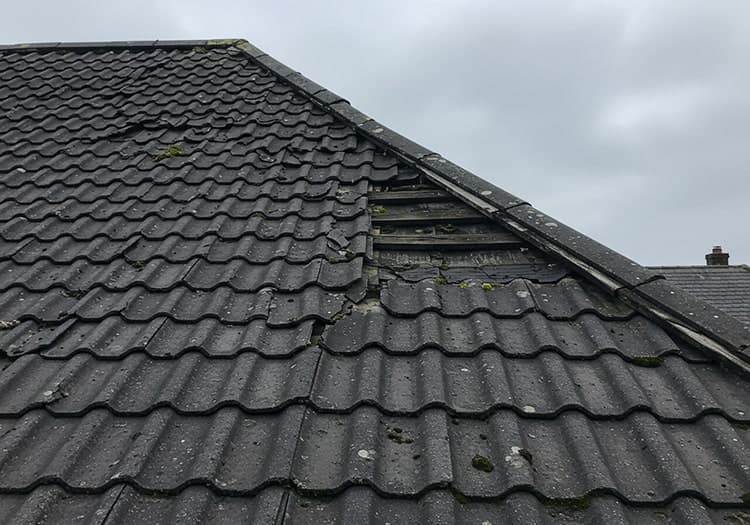
1. Cracked, Slipped, or Missing Tiles and Slates
This is the most common issue we see on call-outs across Dublin 15, Castleknock, and Blanchardstown.
Tiles crack with age, frost, and impact. Slates slip when the fixing nails corrode. Either way, the result is the same: exposed underlay, then exposed timber, then water inside.
What to look for: Stand at ground level and use your phone camera to zoom in on the roof surface. Look for gaps, misaligned rows, or dark patches where tiles have shifted. After heavy rainfall, check the attic for any signs of daylight or dripping.
When to act: One or two cracked tiles is a straightforward roof repair. A whole slope of loose slates may mean the fixings have failed across a wider area, and a professional assessment makes sense before it spreads.
2. Damaged or Missing Flashing
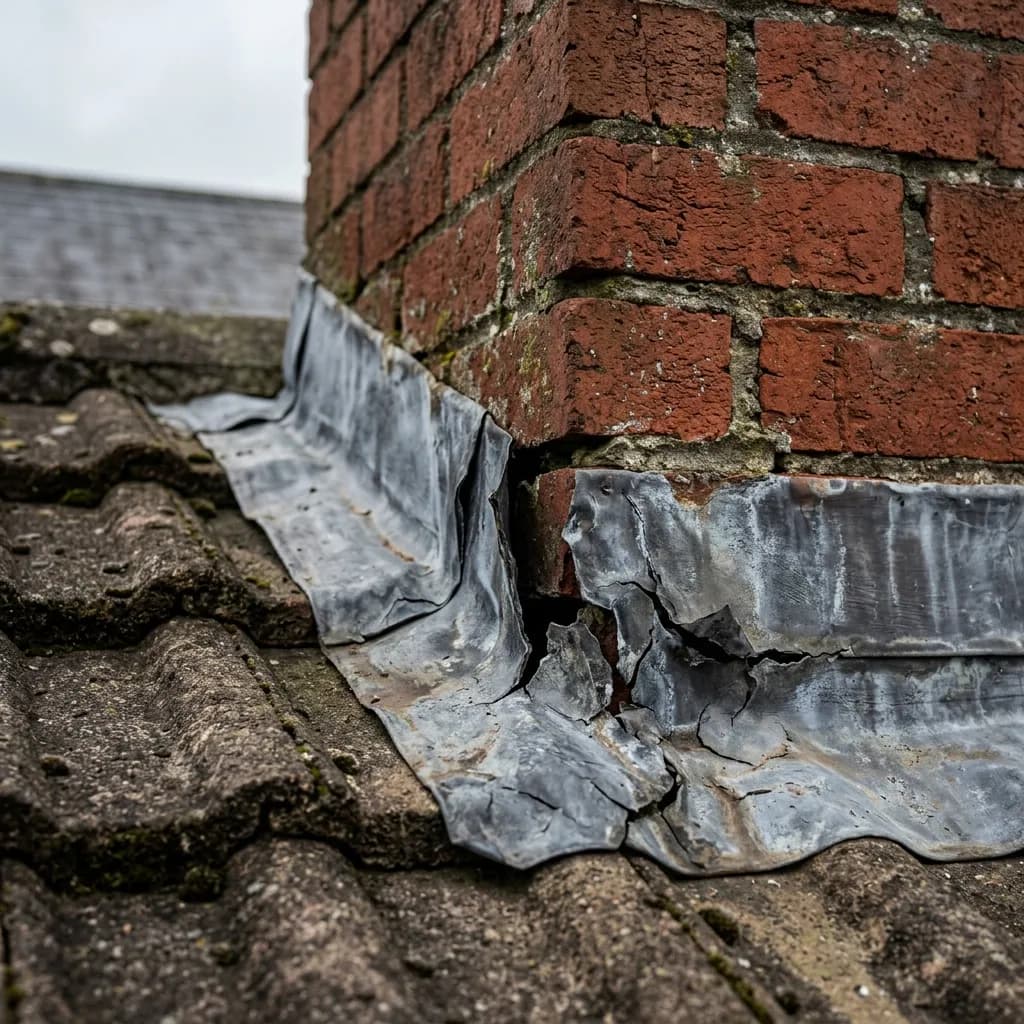
Flashing is the metal — usually lead — that seals the joints between your roof covering and the walls, chimneys, and skylights. Think of it as the rain jacket for the most vulnerable parts of your roof. If it fails, everything underneath gets wet.
On older Dublin properties, especially Victorian and Edwardian terraces, lead flashing is often the first detail to fatigue. We see cracked, lifted, or completely missing flashing on a significant number of inspection call-outs.
What to look for: Dark staining on walls near the chimney. Damp patches on upstairs ceilings that appear worse after wind-driven rain. From the ground, you might spot lifted edges or visible gaps where the lead meets the brickwork.
When to act: Flashing failures don't heal themselves. If you see signs, a proper roof leak repair is the right move — before water reaches your timber or insulation.
3. Blocked or Sagging Gutters
Gutters are easy to ignore. They're out of sight, and they work silently when they're clear. When they block up with leaves, moss, or debris, the water overflows and runs down the walls of your home.
That overflow doesn't just stain render. Over time, it saturates walls, rots fascia boards, and can even work its way into the internal structure.
What to look for: Watermarks or green streaks on external walls below the gutter line. Sagging sections. Visible plant growth in the channel. During rainfall, watch for overflow instead of water flowing cleanly into the downpipe.
When to act: A gutter clean and check is one of the cheapest things you can do after moving in. If the gutters are cracked, sagging, or pulling away from the fascia, a full gutter, fascia, and soffit repair may be needed.
4. Failed Chimney Pointing and Cappings
Dublin has thousands of homes with chimneys that haven't been repointed in decades. The mortar between the bricks softens over time, and once it starts crumbling, rainwater gets inside the chimney stack.
That water travels downward, staining bedroom ceilings and sometimes causing damp on multiple floors — often confused with a roof leak because the symptoms look identical.
What to look for: Soft or missing mortar between chimney bricks (visible with phone zoom). Damp patches on ceilings or walls near the chimney breast. A chimney cap that's cracked or missing entirely.
When to act: If the mortar is visibly deteriorating, it's time for chimney repointing. Left alone, water can penetrate deeply enough to damage internal plasterwork and structural timbers. See our guide on chimney, valley, and leadwork repairs for more detail.
5. Damp Patches, Staining, or Bubbling Paint Inside
This is often the first sign that something on the roof has already failed. Brown stains on ceilings, bubbling paint, or a musty smell in upstairs rooms all point to water getting in.
The challenge is that water travels. A stain on the left side of the bedroom ceiling might trace back to a failure on the right side of the roof. That's why diagnosis matters more than guesswork.
What to look for: Ceiling stains that grow after rainfall. Wallpaper lifting near external walls. Mould in corners or around window reveals. A musty smell in the attic.
When to act: Don't paint over it. Get the source identified first. A proper roof inspection traces the entry point so the repair targets the right spot. Otherwise you're just decorating over a problem that's getting worse.
6. Poor Attic Ventilation or Insulation
Not every damp patch is a roof leak. Sometimes, the moisture is coming from inside the house.
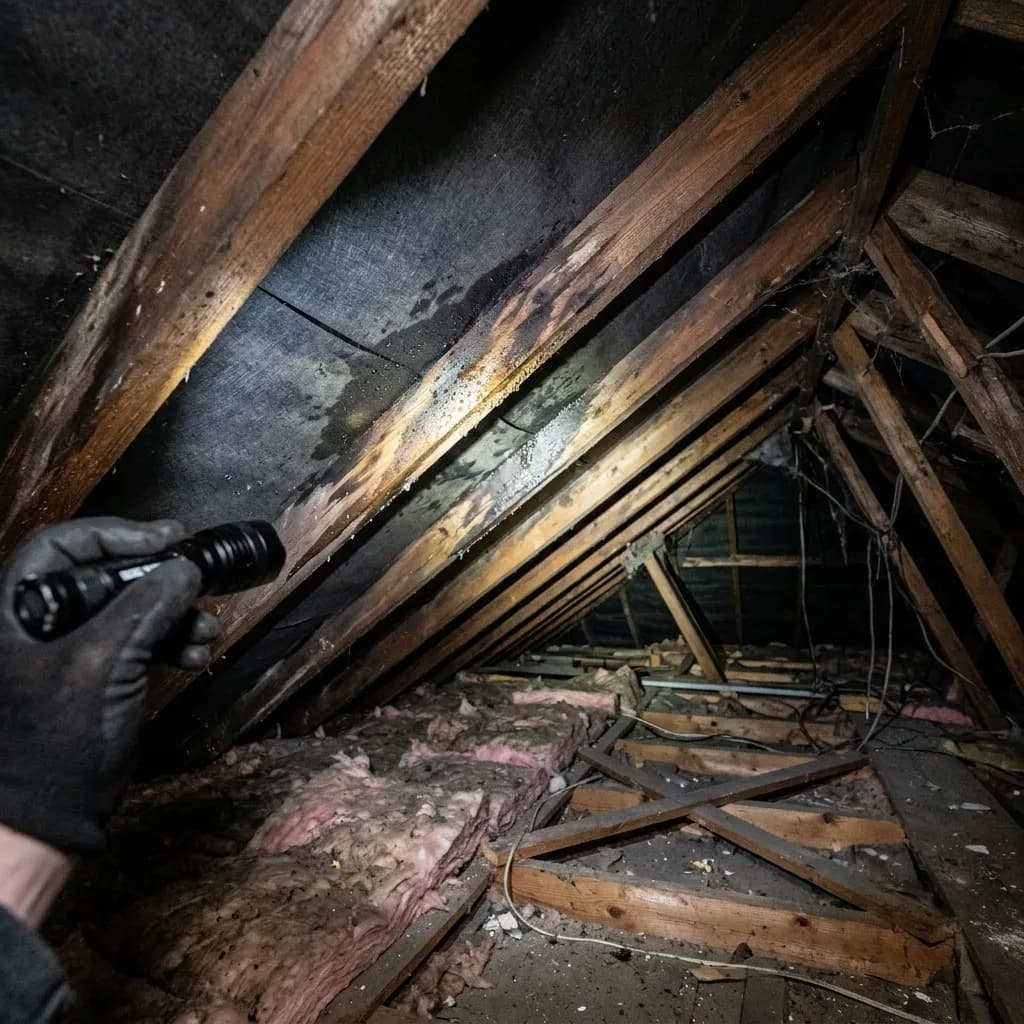
When attics aren't properly ventilated, warm air rises from the living space, meets the cold underside of the roof, and condenses. That moisture drips onto insulation, stains ceiling boards, and creates conditions identical to a leak — except the roof covering is perfectly intact.
This is especially common in 1980s and 1990s developments across Clonsilla, Ongar, and Mulhuddart, where attic insulation was retrofitted without adequate ventilation.
What to look for: Wet insulation, drips on the underside of the roof felt, or mould on timber in the attic — but no obvious entry point from outside. Our blog on condensation versus roof leaks explains the difference in detail.
When to act: Improving ventilation is usually straightforward and prevents long-term timber damage. If you're unsure whether it's condensation or a genuine leak, a professional inspection clears it up quickly.
7. Missing or Failed Dry Verge and Ridge Caps
The verge (gable edge) and ridge (top line) of your roof take the most wind pressure. On older Dublin homes, these are often bedded in mortar — and mortar cracks over time.
When it fails, wind lifts tiles, rain drives underneath, and the damage spreads along the ridge line. Modern dry verge and ridge systems lock tiles mechanically, which removes the mortar problem entirely.
What to look for: Mortar debris in the garden near gable walls. Lifted or tilted ridge tiles visible from the street. Gaps along the verge edge where you can see the underlay.
When to act: If ridge tiles are loose or verge mortar is crumbling, a dry system upgrade is one of the best long-term investments you can make. It stops wind damage before it starts.
How to Check Your New Home's Roof Safely
Simple ground-level and attic checks any homeowner can do after moving in. No ladders or climbing required.
Supplies Needed:
- Notebook
- Phone camera
Tools Needed:
- Torch
Step 1: Walk the perimeter and look up
Use your phone zoom to scan the roof surface from each side of the property. Look for cracked, slipped, or missing tiles, lifted flashing near the chimney, and any mortar debris on the ground.
Step 2: Check gutters during rainfall
Step outside during rain and watch the gutters. Water should flow evenly into downpipes with no overflow, sagging, or splashing against the walls.
Step 3: Inspect ceilings and walls inside
Look at every upstairs ceiling and external wall for brown stains, bubbling paint, damp patches, or musty smells. Note the location and size of any marks.
Step 4: Check the attic safely
Use a torch to look at the underside of the roof covering. Check for daylight, wet insulation, drips, or mould on timber. Stay on boarded areas only — never step between joists onto the ceiling below.
Step 5: Record and photograph everything
Take photos and notes of anything unusual. This gives your roofer a head start and helps them prioritise what to inspect first.
What Determines the Cost of Roof Repairs on a New Purchase
Every roof is different, and repair costs depend on a handful of practical variables:
- Access and height — A bungalow is simpler than a three-storey Victorian terrace. Scaffolding adds to the cost but is essential for safety.
- Material type — Natural slate, concrete tile, and lead all carry different material and labour costs.
- Extent of damage — One cracked tile versus a full ridge line replacement are very different jobs.
- Underlying damage — If water has already reached timber or insulation, the repair scope widens.
We don't quote exact prices online because no two roofs are the same. But by staying local and keeping overheads lean, we typically save homeowners 15 to 20 percent compared with larger, high-overhead roofing contractors — without cutting corners on quality.
The best way to understand your specific costs is to book a proper inspection. We'll walk you through what needs attention now, what can wait, and what the investment looks like.
Frequently Asked Questions
Yes. Most pre-purchase surveys only give a general overview of the roof. A dedicated roof inspection checks flashing, tiles, gutters, chimney pointing, and the attic space in detail — which is where most hidden problems are found.
Your Roof Doesn't Have to Be a Worry
Moving into a new home should feel exciting, not stressful. And most roof issues — when caught early — are manageable, affordable, and completely fixable.
The key is not to wait until a storm forces the issue. A quick check now, even from ground level, puts you ahead of the problem. And if anything looks off, a proper inspection gives you the facts so you can plan with confidence instead of reacting in a crisis.
We'd rather tell you your roof is in good shape than watch a small problem become a big one. That's how we've built our reputation across Dublin — by being honest about what's needed and fair about what it costs.
If you've just moved in and want your roof checked properly, we're here to help.
Get Your New Home's Roof Inspected
Book a detailed roof inspection with your local Dublin roofing team. We'll tell you exactly what needs attention — and what doesn't.
✅ Free Quote • Same-Day Response • Local Dublin 15 Team • No Hidden Costs